
Start with how you actually travel
The best adventure van layout is the one that fits the way you already live and play, not a fantasy floorplan you saw online. Before you think about cabinetry and finishes, think about how many people usually travel with you, what gear you bring, and how often you move the van during trips. Those answers will quickly point you toward either a shorter or longer wheelbase and the type of interior you need.
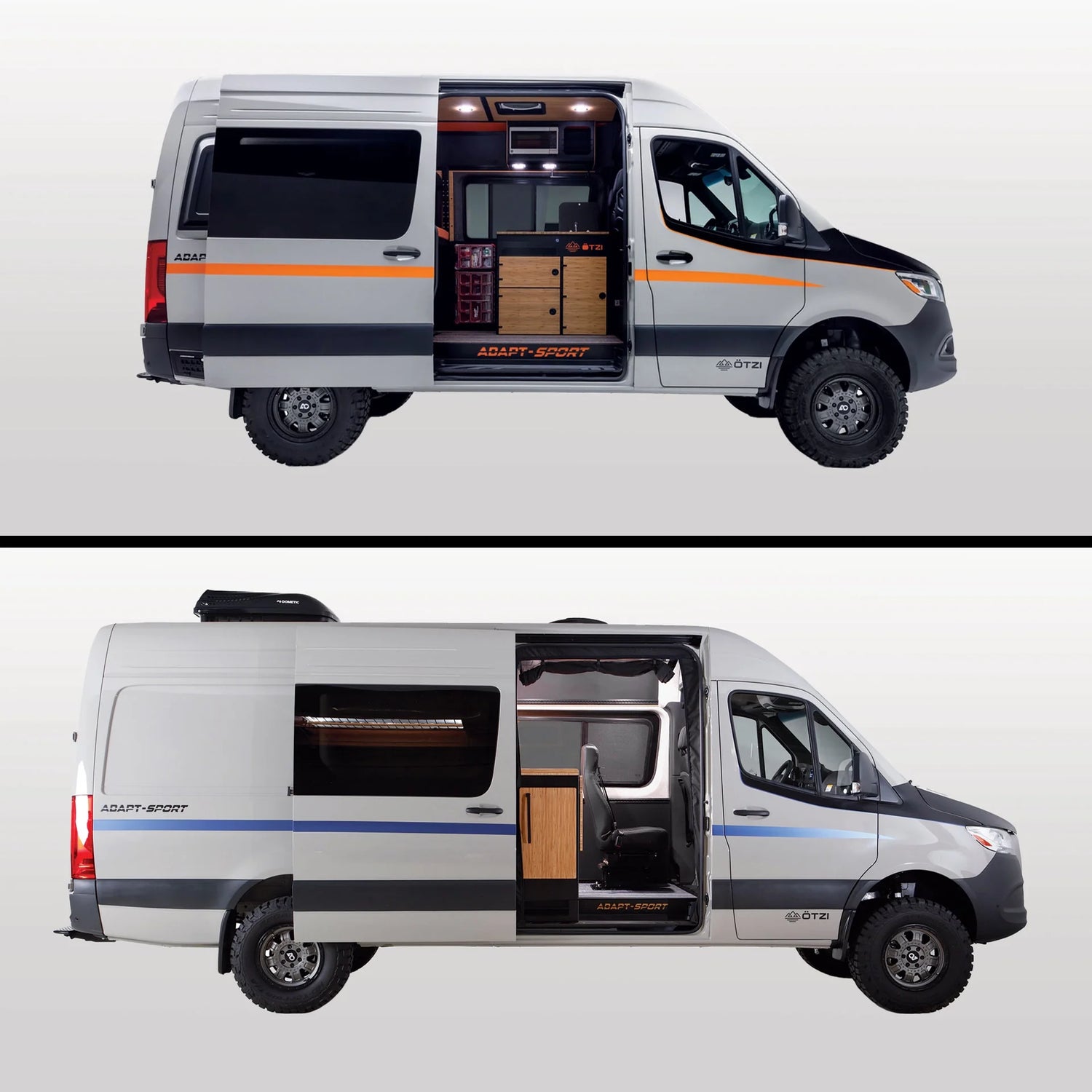
At Otzi Vans, we’ve focused our lineup on two layouts: the Adapt‑Sport 144 and Adapt‑Sport 170. Both use the same Lifestyle Bed System in the back, but the way the middle of the van is configured—and how many people it supports—is tuned for real‑world use.
When the Adapt‑Sport 144 layout makes sense
The Adapt‑Sport 144 is built on the shorter Sprinter wheelbase. It’s designed to seat 2–3 people and sleep 2–4, which makes it a great fit for:
-
Solo travelers and couples who want a nimble, easy‑to‑park van.
-
Small families with one child who don’t need four permanent seats.
-
Riders and surfers who prioritize gear space and maneuverability over maximum interior volume.
Off‑road and on rougher access roads, the shorter wheelbase is a real advantage. The 144 is more maneuverable, easier to place on tight trails, and less likely to high‑center on uneven terrain or steep transitions.
Inside, the Lifestyle Bed System gives you a comfortable sleeping platform that can reconfigure into seating, table, lounge, and workstation arrangements. You still have room for bikes, boards, and bins underneath and alongside, while the shorter length makes it easier to fit into trailheads, city spots, and tight driveways.

When the Adapt‑Sport 170 layout is the better choice
The Adapt‑Sport 170 uses the longer Sprinter wheelbase to create space for more people and activities. It’s designed to seat 4–6 and sleep 4+, making it ideal for:
-
Families with kids who need real seats for everyone.
-
Friends who travel together regularly and want more permanent seating.
-
People who want the option to host extra guests, grandparents, or friends on trips.
You still get capable road manners and the ability to explore forest roads and access trails, but with more interior volume. The extra length allows for additional seating, more open living space, and more flexible storage zones while still using the same Lifestyle Bed System in the rear. That system can shift between bed, seating, table, lounge, and workstation modes, so the rear of the van can be a bunk room one night and a hangout or work area the next.

How the Lifestyle Bed System shapes the layout
Instead of building a fixed bed that locks you into one way of using your van, our Lifestyle Bed System is designed to reconfigure as your trips change. It’s integrated into both Adapt‑Sport layouts, so you don’t have to choose or purchase it as a separate product. You simply choose the van—144 or 170—and the system comes built in.
Day to day, that means the rear of your van can be:
-
A full‑size sleeping platform.
-
A lounge with backrests and a table.
-
A workstation configuration for travel days and remote work.
Underneath and around it, you still have space for bikes and gear. Over five or ten years of ownership, that mix of storage, seating, and sleep flexibility matters more than squeezing in one more fixed cabinet on day one.
Questions to ask before you choose
To decide between layouts, ask yourself:
-
How many people do I need real, belted seats for on most trips?
-
Do I value easier parking and maneuvering, or maximum interior room?
-
What are the biggest pieces of gear I need to carry inside the van?
-
Do I plan to use the van mostly for weekends, longer trips, or both?
Once you answer those, the choice between Adapt‑Sport 144 and 170—and the layout that supports your life—usually becomes clear.