
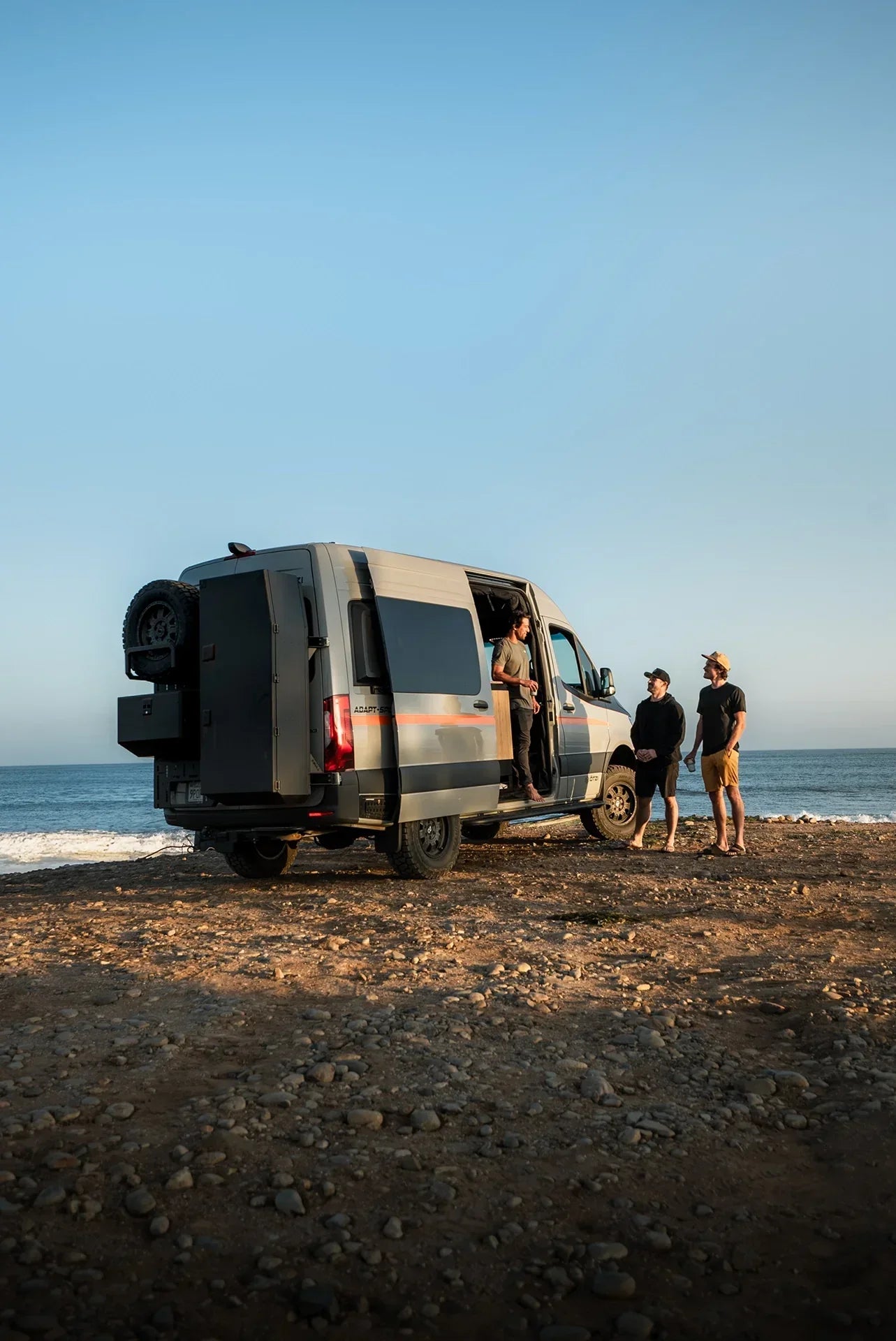
Why the Sprinter is such a popular adventure van platform
The Mercedes‑Benz Sprinter has become the default platform for many adventure vans because it blends modern safety and tech with solid driving manners and available AWD. It’s tall enough inside for comfortable movement, narrow enough outside to still fit into normal parking spaces, and supported by a wide service network. For builders, it’s a strong blank canvas for creating a reliable adventure vehicle.
At Otzi Vans, our Adapt‑Sport 144 and 170 are both built on the Sprinter chassis, so you get those benefits with interiors designed specifically around real adventure use rather than generic RV layouts.

What does a Sprinter adventure van really cost?
Costs vary based on chassis, options, and build level, but it helps to think in two parts: the van itself and the adventure build. A new Mercedes‑Benz Sprinter chassis suitable for an adventure van typically ranges from roughly 70,000 to 80,000 dollars depending on wheelbase, drivetrain, and options. On top of that, the adventure conversion adds the interior, electrical system, water, heating, and all the details that make the van livable.
For our Adapt‑Sport models, we package this into a single, transparent starting price that includes both the van and the full build:
-
Adapt‑Sport 144 full build, including the Sprinter chassis, starts at 159,850 dollars.
-
Adapt‑Sport 170 full build, including the Sprinter chassis, starts at 176,850 dollars.
You’re paying not just for materials, but for the engineering work that keeps weight under control, avoids rattles, and holds up over years of hard use.
Typical build timelines for a Sprinter adventure van
Another common surprise is how long a proper build can take. Between ordering or sourcing the chassis, scheduling the build, and completing the conversion, many projects in the market can stretch well beyond expectations. Our builds typically take about 8–14 weeks once your van is in our hands, depending on the options you choose and demand at the time.
Because we’ve focused our process around the Adapt‑Sport 144 and 170, with proven layouts and engineered systems, we can give realistic timelines and move efficiently without rushing. A well‑planned process—where decisions are made up front and changes are minimized mid‑build—keeps your project moving and reduces stress.
What people don’t tell you about weight, noise, and maintenance
A Sprinter adventure van isn’t just about what you can see in photos. Three things can make or break your experience over the long haul:
-
Weight: Overbuilt interiors and excessive features add weight, which hurts handling, braking, and efficiency.
-
Noise: Poorly thought‑out builds can rattle, squeak, and buzz over every imperfect road, making long drives tiring.
-
Maintenance: Complex, one‑off systems can be harder to diagnose and fix if something goes wrong far from home.
We obsess over these “invisible” factors in our Adapt‑Sport vans. The way we construct the Lifestyle Bed System, storage, and interior structure is tuned to keep weight reasonable, noise down, and systems serviceable, whether you’re running a 144 on tight off‑road trails or loading a 170 for a long highway push to the mountains.

Choosing between the 144 and 170 for long‑term ownership
From a buyer’s standpoint, the biggest decision is often 144 vs 170. The 144 is easier to live with day to day, especially if you’ll be driving it in cities, parking in tight spaces, or exploring rougher access roads where a shorter wheelbase, better breakover angle, and lower chance of high‑centering are real advantages. The 170 shines if you have more people, more gear, or both and you’re comfortable managing a longer vehicle on the road and in parking lots.
If you’re unsure, think ten years out: Will you likely add kids, bring more friends, or shift toward longer trips? Or will you mostly be traveling as one or two people who care more about agility, off‑road maneuverability, and quick weekend trips? That long‑term view should drive your decision more than any single photo or trend.