

Otzi buyer education / Guide 13
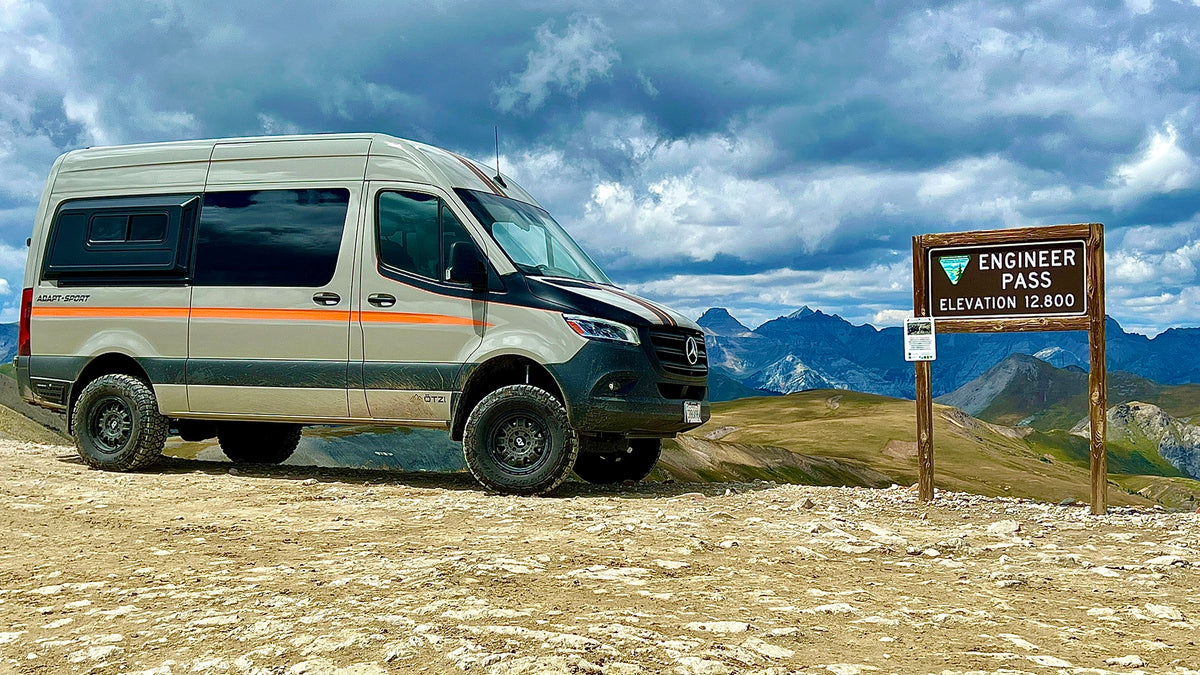
Otzi adventure vans can weigh as light as 6,500 pounds, depending on configuration, with certified and registered vehicle weights. When comparing Sportsmobile Sprinter weight and payload, use the finished van rather than the empty chassis. That tells you how much of its rated capacity remains for people, water and equipment.
How does Sportsmobile Sprinter weight compare with Otzi?
A Sportsmobile owner reported 7,335 pounds unloaded for a completed 144-inch Sprinter collected in December 2018. Otzi publishes builds as light as 6,500 pounds, depending on configuration. The Sportsmobile figure describes one historical conversion; compare the documentation for the actual vans you are considering, including their installed equipment and weighing conditions. (Sportsmobile owner report; Otzi weight guide)
| Completed-van reference | Weight information | Context for the buyer |
|---|---|---|
| Otzi production builds | As light as 6,500 lb, depending on configuration | Published starting weight; use the selected build's documentation when planning its travel load. (Otzi) |
| Sportsmobile North conversion collected in December 2018 | 7,335 lb unloaded, reported by owner WanderingBob-SMB | Sprinter 2500 high roof, 144-inch wheelbase; the owner said Sportsmobile weighed it after conversion. Complete fuel and water conditions were not specified. (Owner report) |
| Cargo allowance reported for that Sportsmobile | 757 lb CCC | The owner said the calculation had already deducted freshwater and occupants. It is a different measure from unloaded weight or an allowance before those loads. (Owner report) |
Otzi's lightweight approach is useful at the build-selection stage: less weight committed to the interior and installed equipment leaves more of the vehicle's rating available for travel. The finished configuration remains the relevant number, whether you keep the equipment straightforward or select additional comfort features.
Why should you compare the completed van rather than chassis payload?
The capacity of an unconverted Sprinter includes the weight allowance later used by cabinets, flooring, batteries and other installed equipment. Mercedes-Benz distinguishes payload before and after upfitting for this reason. For a camper-van purchase, the completed conversion and its updated loading information are the useful starting point. (Mercedes-Benz vehicle-weight bulletin)
In its MY2019+ technical bulletin, Mercedes-Benz defines:
- Base curb weight: The base vehicle plus operating fluids at full capacity, such as fuel.
- Unloaded vehicle weight after upfit: Base curb weight plus permanently installed conversion equipment.
- Payload after upfit: GVWR minus the completed unloaded vehicle weight. (Mercedes-Benz)
The bulletin distinguishes fresh water and travel cargo from the operating fluids included in base curb weight. That makes the recorded weighing conditions important: a fuel-filled completed van and a vehicle with fuel omitted are different starting points. Apply the definitions used in the actual vehicle's documentation.
A larger cargo-van payload number in a chassis brochure does not remain untouched after conversion. This is why we discuss Otzi as a completed production adventure van, with the living equipment and storage included in the configuration you are evaluating.
What does the Sportsmobile owner's 757-pound cargo figure mean?
The owner described 757 pounds of cargo-carrying capacity after deductions for freshwater and occupants. Those loads had already been accounted for in the reported calculation. The useful follow-up is what remained to be added: personal gear, food, tools and any equipment installed after the vehicle was weighed. (Sportsmobile owner report)
Before using a CCC or occupant-and-cargo figure, ask which items are included:
- Passengers: What occupant allowance has already been deducted?
- Water: Is the fresh-water tank empty, partially full or already allowed for?
- Fuel: What fuel quantity is included in the starting weight?
- Equipment: Were racks, extra batteries, a spare-tire carrier or other additions installed before the measurement?
Does a higher-rated chassis make the build lighter?
A higher-rated chassis can support a larger permitted load, but it does not reduce the weight of the completed vehicle. Sportsmobile discusses heavier-duty Sprinters for builds with substantial equipment. Otzi's approach starts with controlling the build weight itself, while providing the living features and storage needed for everyday travel. (Sportsmobile chassis overview; Otzi Adapt-Sport 144)
One owner's documented travel setup illustrates the distinction. David Elmore describes a 2012 Sportsmobile Sprinter 3500, 170-inch high-roof dually, ordered with an 11,030-pound GVWR. Packed for three months in Alaska, with the owners aboard and all tanks except holding tanks full, the van reportedly weighed 10,900 pounds. (David Elmore's equipment account)
The difference between those reported figures is 130 pounds of remaining gross-weight allowance. That is a fully loaded long-trip example on a heavier chassis, rather than an unloaded weight to place beside Otzi's starting figure. It shows why the completed travel setup matters even when the chassis has a higher rating. (David Elmore)
For your purchase, review actual total and axle loads alongside the vehicle's ratings. A higher rating addresses permitted capacity. Reducing unnecessary build weight also addresses the mass you carry on every drive, whether the garage is full or you are heading out for a short weekend.
How does weight affect driving, fuel economy and sand capability?
Weight matters after the packing is finished. A heavier van requires more energy to accelerate and climb, and more energy must be managed when slowing down or descending. On soft sand, additional weight also works against flotation. These are practical reasons to value lightweight construction beyond its remaining cargo allowance. (U.S. Department of Energy; OpenStax; Outback Travel Australia)
What changes behind the wheel?
For a comparable drivetrain, reducing weight means less mass to accelerate when joining traffic or climbing a grade. On a descent, a heavier vehicle has more gravitational energy to manage through engine braking, the brakes and other resistance. That makes weight relevant to the driving experience, not just the loading label. (U.S. Department of Energy; OpenStax)
How the load is carried matters too. Pack heavy equipment low and distribute it evenly, as Queensland Parks recommends in its driving-safety guidance. (Queensland Parks and Wildlife) During an Otzi walkthrough, consider where your equipment will ride as well as whether it fits.
Why does lower weight help fuel economy?
The U.S. Department of Energy recommends removing unnecessary weight to improve fuel economy. For an adventure van, that starts with the permanent build, not just the bags packed for a trip. Keeping useful living equipment while controlling its weight reduces the load you carry every mile. (FuelEconomy.gov)
Speed, wind resistance, terrain and driving style also influence consumption. Weight-conscious construction belongs alongside sensible driving and thoughtful equipment selection as part of an efficient travel setup. (FuelEconomy.gov; U.S. Department of Energy)
Why is weight especially important in soft sand?
In comparable sand conditions and with comparable tire support, a heavier vehicle tends to sink farther and push more sand ahead of its tires. Outback Travel Australia's dune-driving guidance specifically favors lighter vehicles and leaving unnecessary weight behind. Less weight helps the tires support the van near the surface rather than dig through it. (Outback Travel Australia)
Tire setup and technique remain essential. Follow vehicle and tire guidance appropriate to the actual load, keep speeds low when pressures are reduced, and reinflate before returning to harder or paved surfaces. Queensland Parks warns that overly deflated tires can roll off their rims during fast or sudden maneuvers. (Queensland Parks and Wildlife)
This is why we value Otzi's 6,500-pound starting weight, depending on configuration, as more than room for extra cargo. Choose the comfort equipment you will use, pack for the route, and preserve the benefit of a lighter travel setup rather than treating every available pound as something to fill.
How does Otzi control weight without giving up the living space?
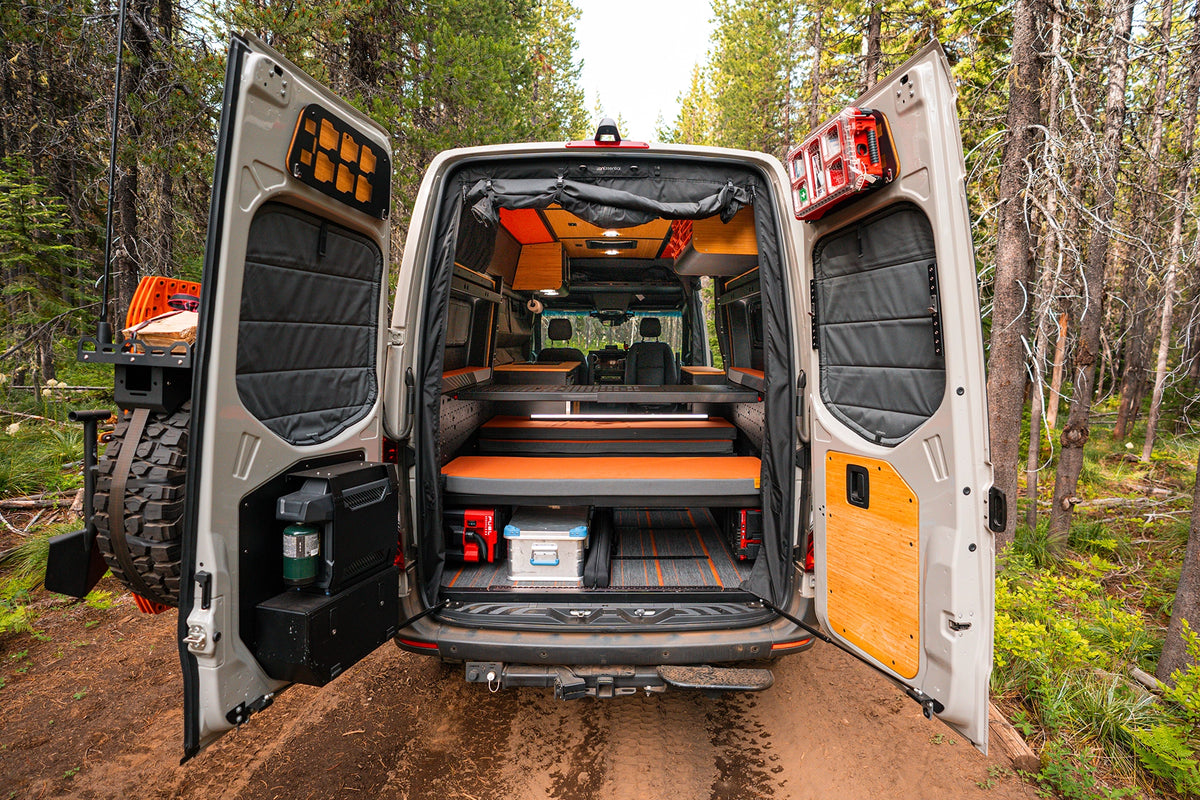
Otzi combines powder-coated aluminum cabinetry with a flexible bed and storage system, plus everyday appliances for cooking and refrigeration. The objective is to manage weight within a complete living space. The Adapt-Sport's production layout gives you a finished arrangement to inspect and use before choosing the equipment for your build. (Otzi Adapt-Sport 144)
Sportsmobile lists Baltic-birch cabinetry with several finish and edging choices. Otzi uses aluminum structures with bamboo faces and accents, making material selection part of the weight-conscious design. Compare the completed cabinetry and equipment, rather than assigning a weight saving to a material name alone. (Sportsmobile materials; Otzi construction)
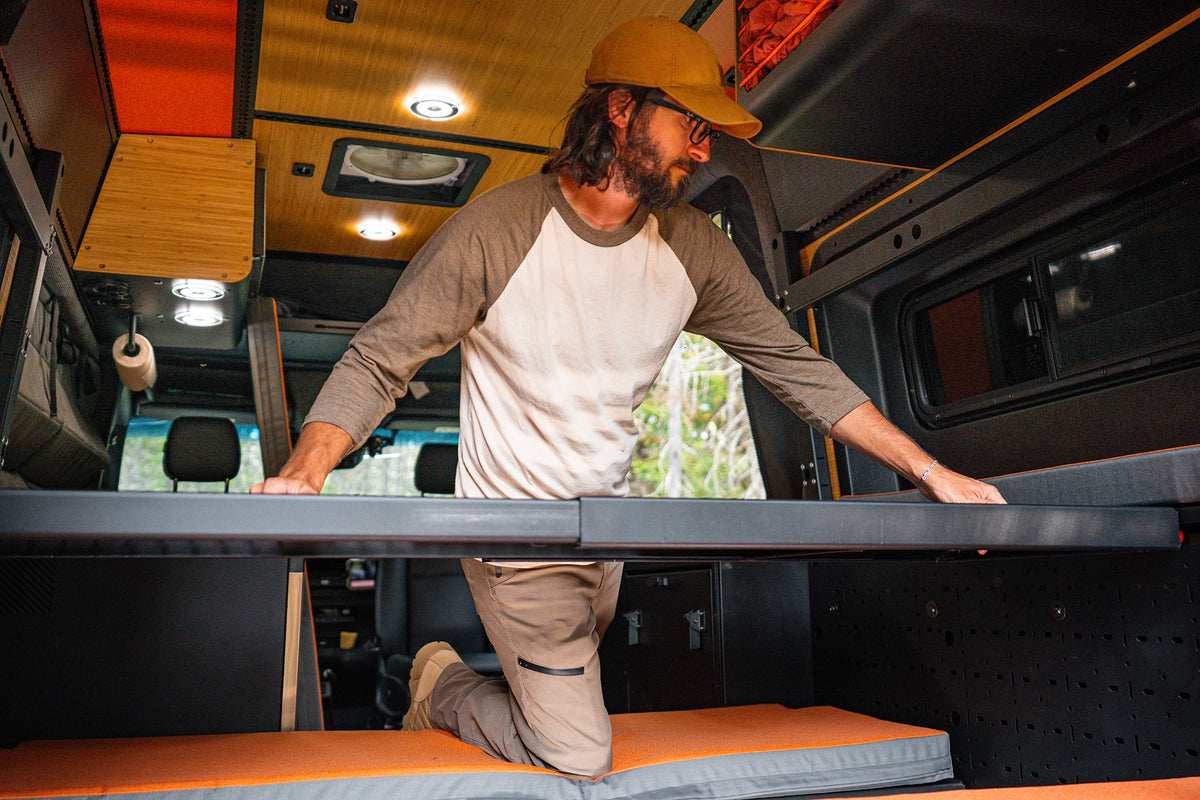
Our removable, expandable Lifestyle Bed System can stay made up as a dedicated bed. You can change the arrangement when your activities change, without needing to convert it every morning.
The Adapt-Sport 144's 78-cubic-foot garage provides space for equipment beneath the bed. Storage volume tells you what will fit; the vehicle's load ratings determine how much weight it can carry. During a walkthrough, check both with the gear you expect to use.
How do water and power choices affect the completed build?
Water and electrical equipment should suit your travel routine rather than simply maximize capacity. Otzi offers a compact power system and separates sink water from optional shower storage. This keeps equipment selection connected to daily use, while making its space and weight part of the configuration discussion before the van is completed.
| Otzi Adapt-Sport 144 feature | Capacity or arrangement | What to consider |
|---|---|---|
| Published battery system | 2,048 Wh, expandable to 5,048 Wh | Your appliances, daily use and charging opportunities. (Otzi 144) |
| Removable sink tanks | 6-gallon fresh and 6-gallon gray | Access for cleaning, filling and choosing drinking water. (Otzi 144) |
| Optional shower storage | Separate 35-gallon fresh and 16-gallon gray tanks | Shower use and how much water the route requires. |
| Fresh water with shower option | 41 gallons combined | Separate sink and shower supplies; choose a practical fill level for the trip. |
The sink container can be removed for cleaning and filled with your preferred filtered water. The shower package adds capacity when you want that feature, rather than making its equipment a requirement for every build.
Discuss electrical capacity in the same way. Start with how you cook, refrigerate food, ventilate the van and charge devices. Then select the equipment around those uses, including any additional demands such as parked air conditioning.
How can you turn the weight figures into a travel plan?
Build a load list around your actual trip, then compare it with the remaining allowance for the completed vehicle. Record what the scale weight already includes so fuel, water and passengers are counted once. The example below is a packing exercise; replace its assumptions with your own measured quantities.
| Trip load not already included in the vehicle weight | Illustrative amount |
|---|---|
| Two adults | 360 lb |
| Fresh water carried | 150 lb |
| Food, clothing and bedding | 120 lb |
| Sports equipment | 100 lb |
| Tools and other supplies | 70 lb |
| Total additional travel load | 800 lb |
For a scale reading that already includes the adults or water, remove those corresponding amounts from the additional-load column. Add any fuel still needed and account for accessories fitted after the recorded weighing.
The next step is distribution. Secure heavier equipment appropriately and check the front, rear and total loaded weights against the vehicle's labels. Mercedes-Benz's body and equipment guidance requires keeping the vehicle within its gross-weight, axle and tire limits, which are separate checks in a completed travel setup. (Mercedes-Benz body and equipment guideline)
Keep the load list with your build documentation and update it when equipment changes. It is easier to plan around a documented allowance than to discover a problem after filling every available storage space.

What should you review during an Otzi walkthrough?
Review the weight documentation, selected equipment and interior together. Ask how your passenger needs, water supply and gear fit the configuration you would receive. Otzi's production approach lets you evaluate the living space and storage in a complete van, with equipment choices discussed against the same practical travel requirements.
Bring your largest gear items or their measurements and try the bed arrangement you expect to use most often. Check access to the galley and storage with that arrangement in place.
Before finalizing the build, review:
- Weight and ratings: The completed configuration, included fluids, vehicle and axle limits.
- Equipment choices: What is standard, what is optional and what will be added later.
- Passenger use: Approved travel seats and restraints, separate from campsite seating.
- Everyday access: Cooking, sleeping, water handling and gear retrieval with the van in use.
Explore the Adapt-Sport 144 and arrange an Otzi walkthrough. Our goal is a comfortable production adventure van with useful space and capacity for the trips you want to take.
Frequently asked questions
How much does a Sportsmobile Sprinter weigh?
One owner reported a 7,335-pound unloaded weight for a Sportsmobile North Sprinter 2500 high-roof conversion with a 144-inch wheelbase, collected in December 2018. Sportsmobile builds vary by chassis, layout and equipment, so use the documentation for the completed van you are considering. (Owner report; Sportsmobile models)
How does that compare with Otzi's weight?
Otzi builds can weigh as light as 6,500 pounds, depending on configuration, with certified and registered vehicle weights. A lighter completed build leaves more capacity within its vehicle rating for travel loads. Compare the selected builds with their equipment and weighing conditions recorded. (Otzi weight guide)
Did the reported 757-pound Sportsmobile cargo allowance include people and water?
The owner said Sportsmobile calculated that 757-pound allowance after subtracting freshwater and occupants. Those items had already been accounted for in the reported calculation. It describes that historical build, not every Sportsmobile conversion. (Owner report)
Can I use the empty Sprinter's payload rating for a completed camper?
Use the completed vehicle's loading information instead. Mercedes-Benz distinguishes payload before upfit from payload after permanently installed equipment has been added. Cabinets, batteries and other conversion equipment use part of the original chassis allowance. (Mercedes-Benz weight bulletin)
Can an Otzi have substantial water capacity without a permanently fixed shower room?
Yes. Otzi's optional shower configuration adds separate 35-gallon fresh and 16-gallon gray tanks. The sink retains removable six-gallon fresh and gray containers, for 41 gallons of combined fresh-water capacity with the shower option.
Does the Adapt-Sport bed need to be reconfigured every day?
No. The removable, expandable Lifestyle Bed System can remain set up as a dedicated bed. You can change it when needed, while the Adapt-Sport 144's 78-cubic-foot garage provides equipment storage beneath it.
Explore Otzi adventure vans
- Adapt-Sport 144: Review the model, equipment and living space.
- Buyer education: Explore the Adventure Van Knowledge Hub.
- Visit Otzi: Discuss your configuration and arrange a walkthrough.