
Otzi Response Platform: Off-Road, Off-Grid Disaster Response Vehicles (Adapt-Sport 144 and 170)
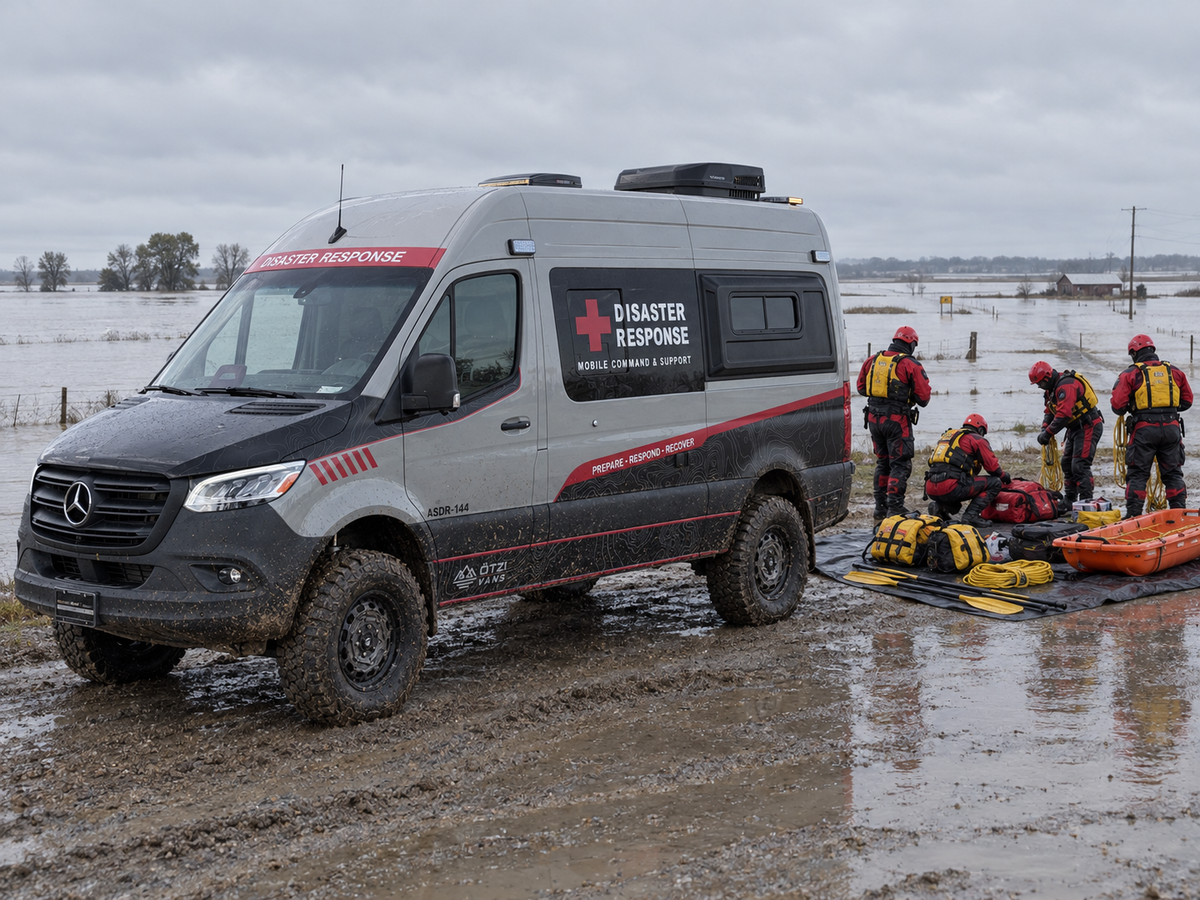
Adapt-Sport 144 and Adapt-Sport 170
Otzi Response Platform
One platform. Multiple mission profiles. Built to arrive, operate, and sustain itself.
Off-Road. Off-Grid. On Mission.
Built to arrive, operate, and sustain itself
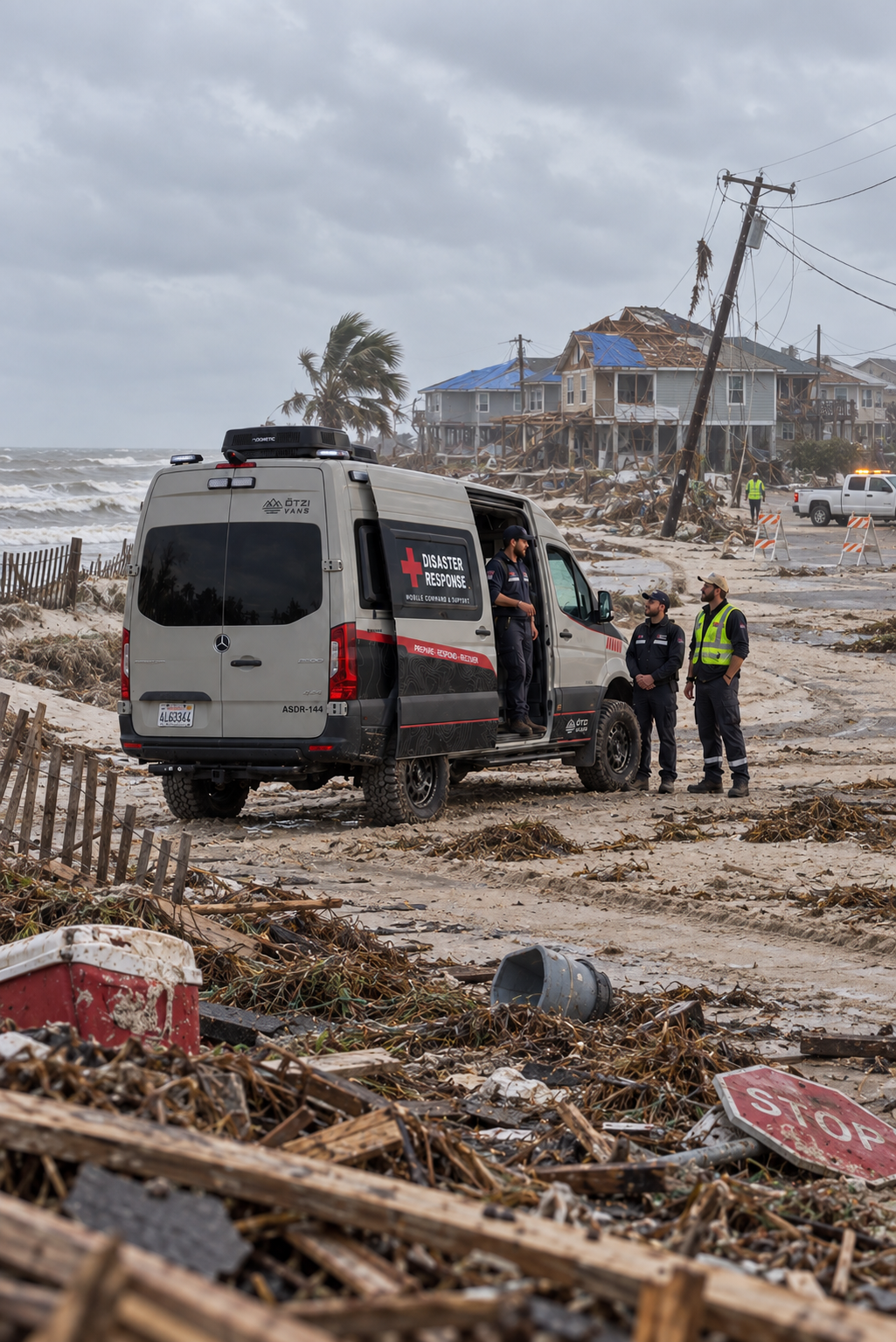
Response operations often start where conventional fleet vehicles stop working: washed-out roads, remote terrain, disaster zones, and areas where the power grid is down. Otzi Vans builds off-road, off-grid response vehicles for those conditions. Each vehicle reaches the scene, gets to work, and supports its crew without outside help for a minimum of 72 hours.
Otzi Vans is an NHTSA-registered final-stage manufacturer in Temecula, California. We design, engineer, and fabricate every vehicle in-house, and we build it around the buyer’s mission profile, agency doctrine, and existing equipment cache. The platform serves search and rescue, emergency management, wildland and municipal fire, tactical medical, utility restoration, and government fleets.
Operate
Eight Mission Profiles. No Trip Back to the Shop.
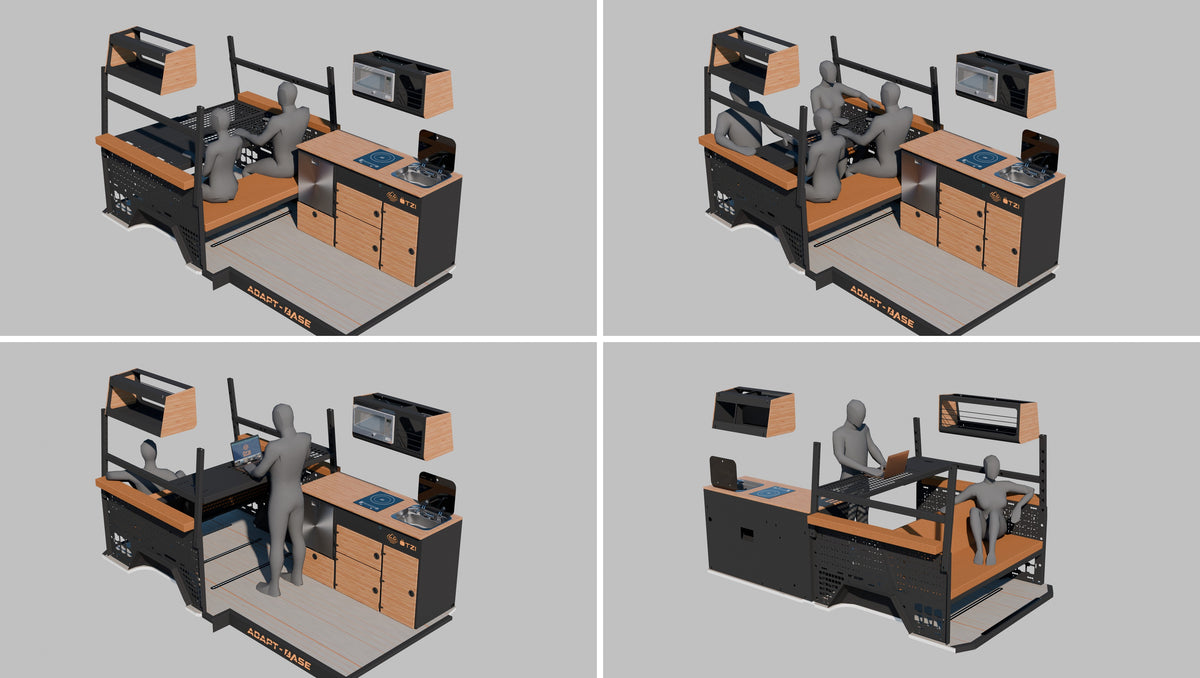
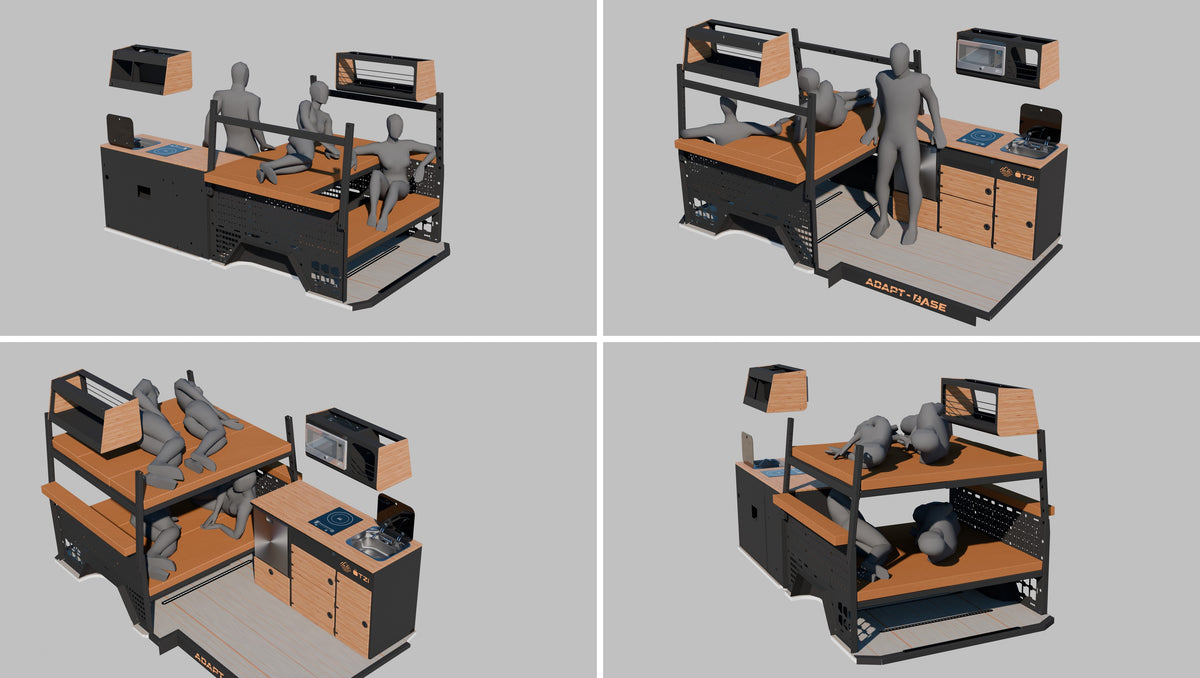
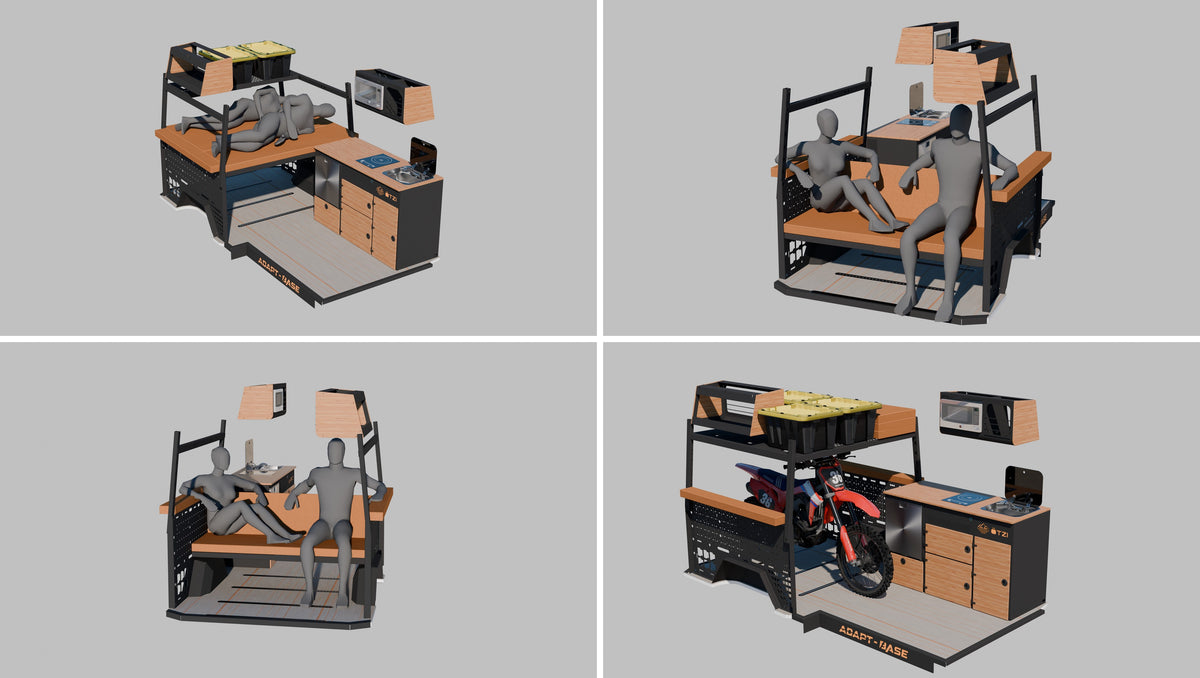
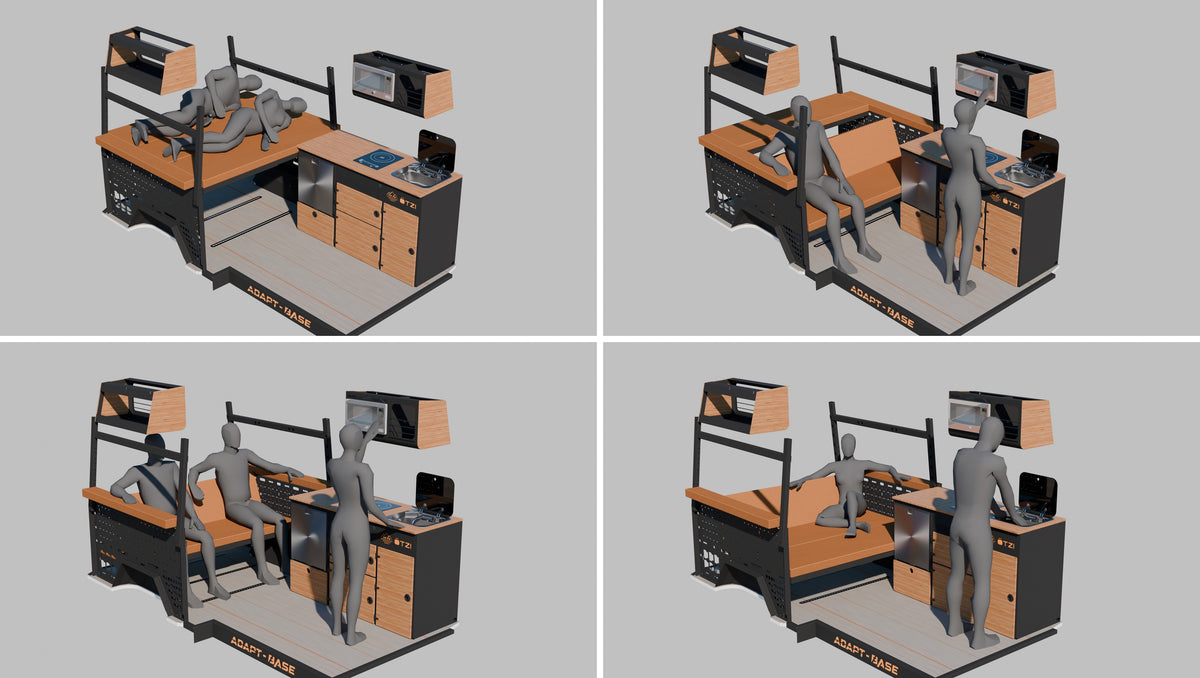
Interior systems mount to an aircraft-grade aluminum L-Track system. Operators can switch between eight mission profiles in the field, with no trip back to the shop:
- Personnel transport
- Gear transport
- Mobile command
- Communications
- Medical triage
- SAR staging
- Drone deployment
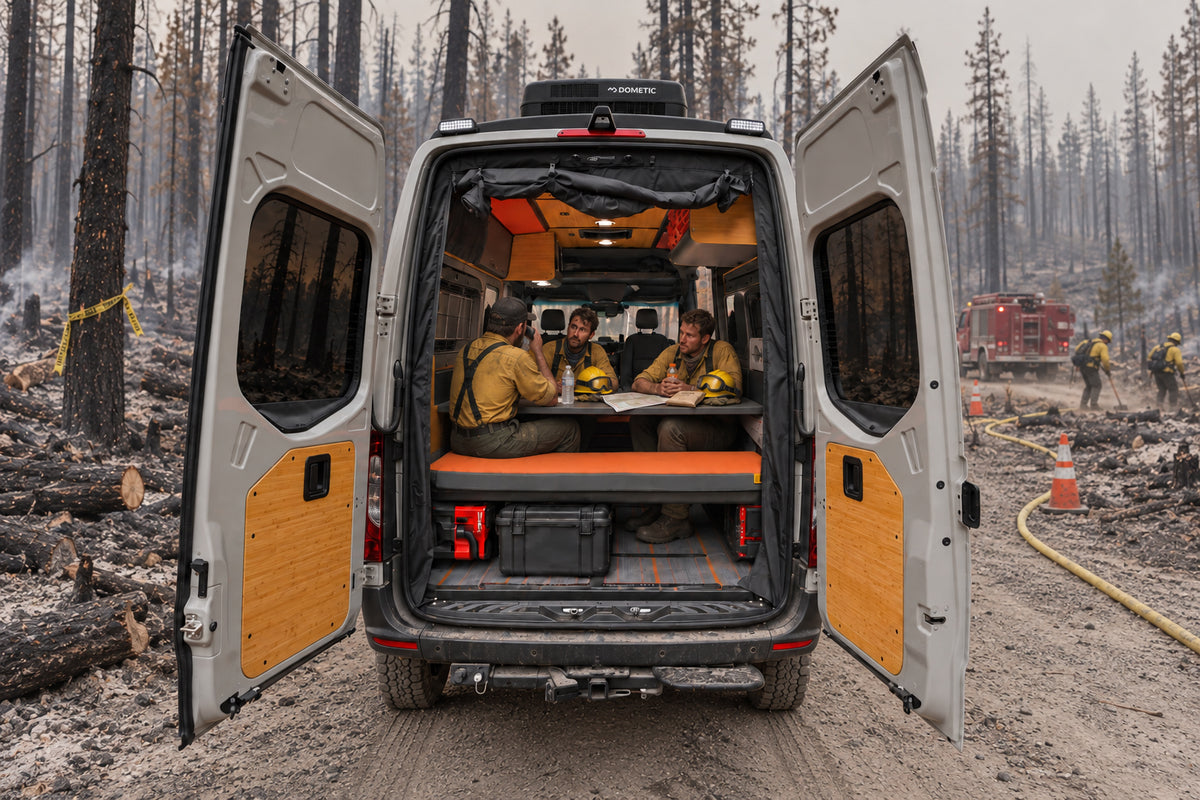
- Short-term crew shelter
Pictured: crew shelter configuration with the rear table deployed.
Aircraft-Grade Aluminum L-Track
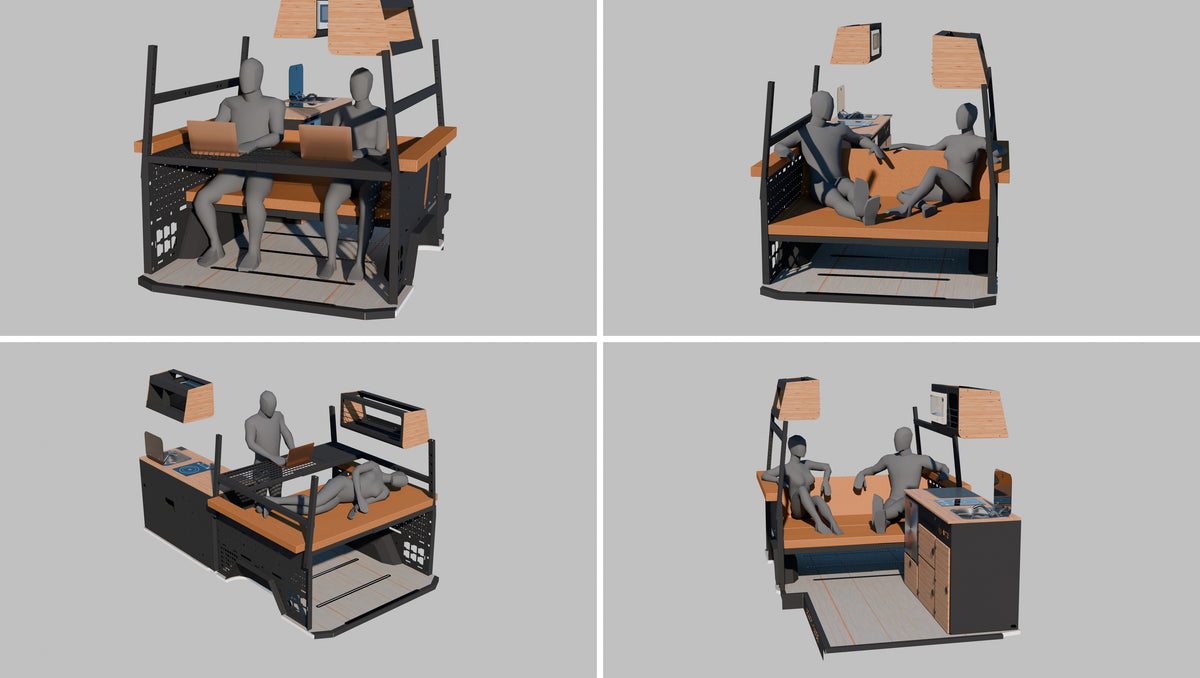
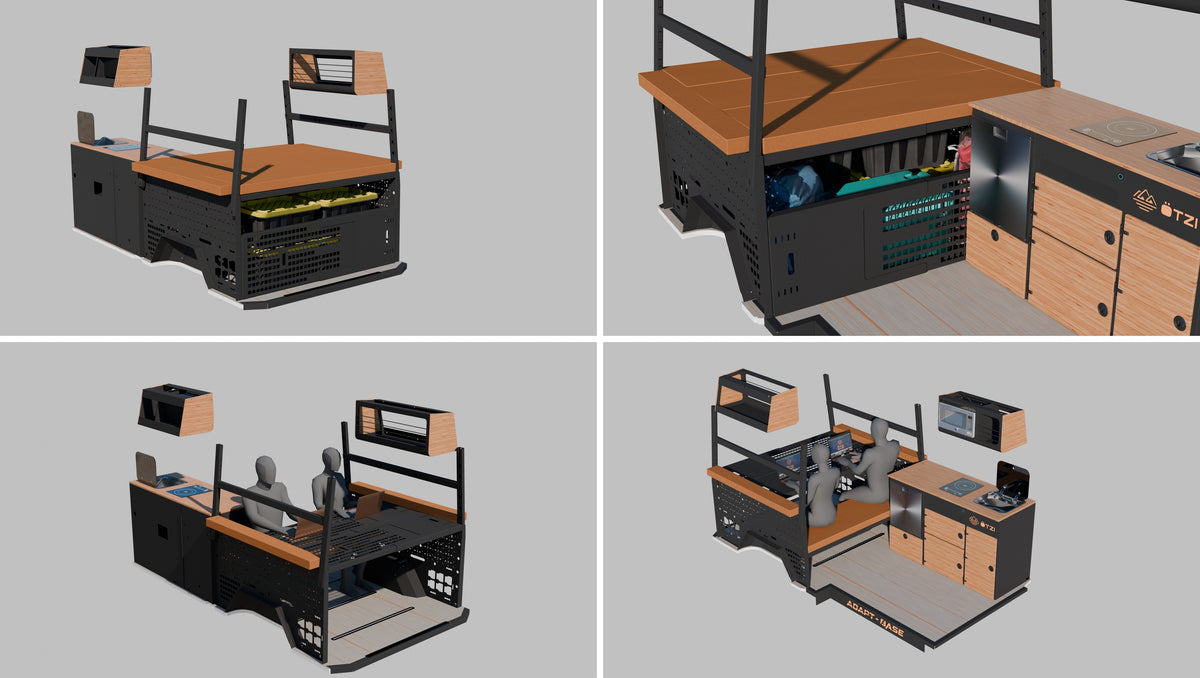
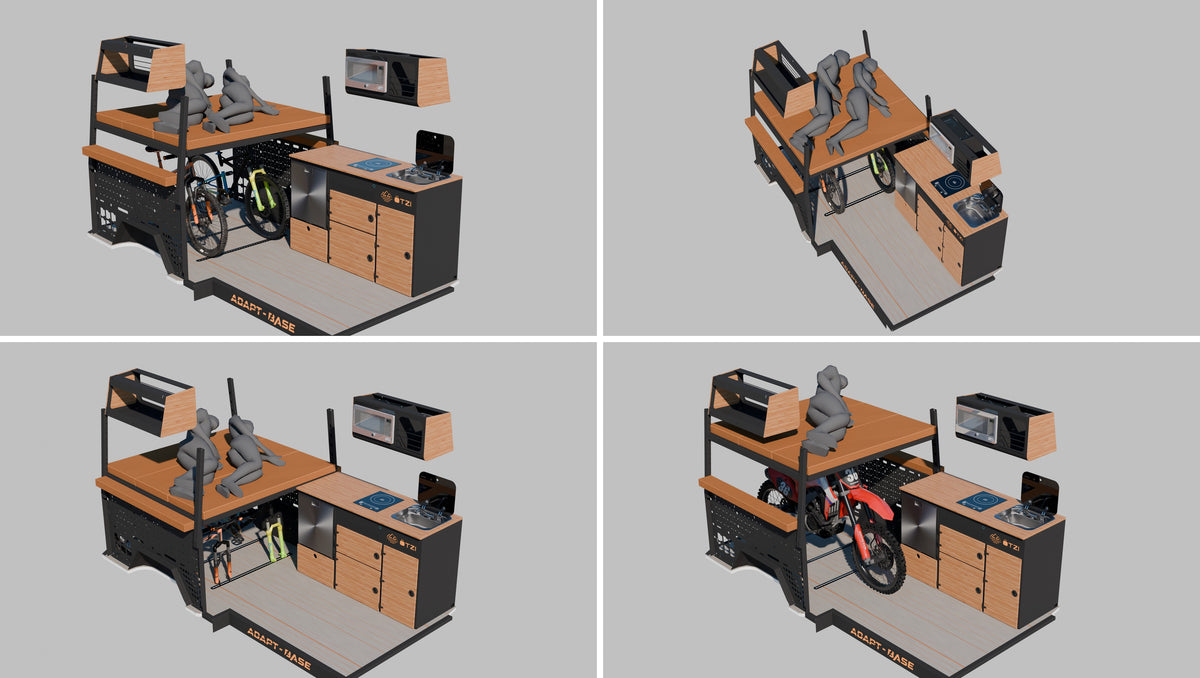
ONE INTERIOR ARCHITECTURE, RECONFIGURED IN THE FIELD
Configuration renders of the modular L-Track interior. The same mounting architecture carries crew seating, bunk shelter, workstations, open-floor cargo, and gear-cache layouts, and changes over in the field.
Arrive
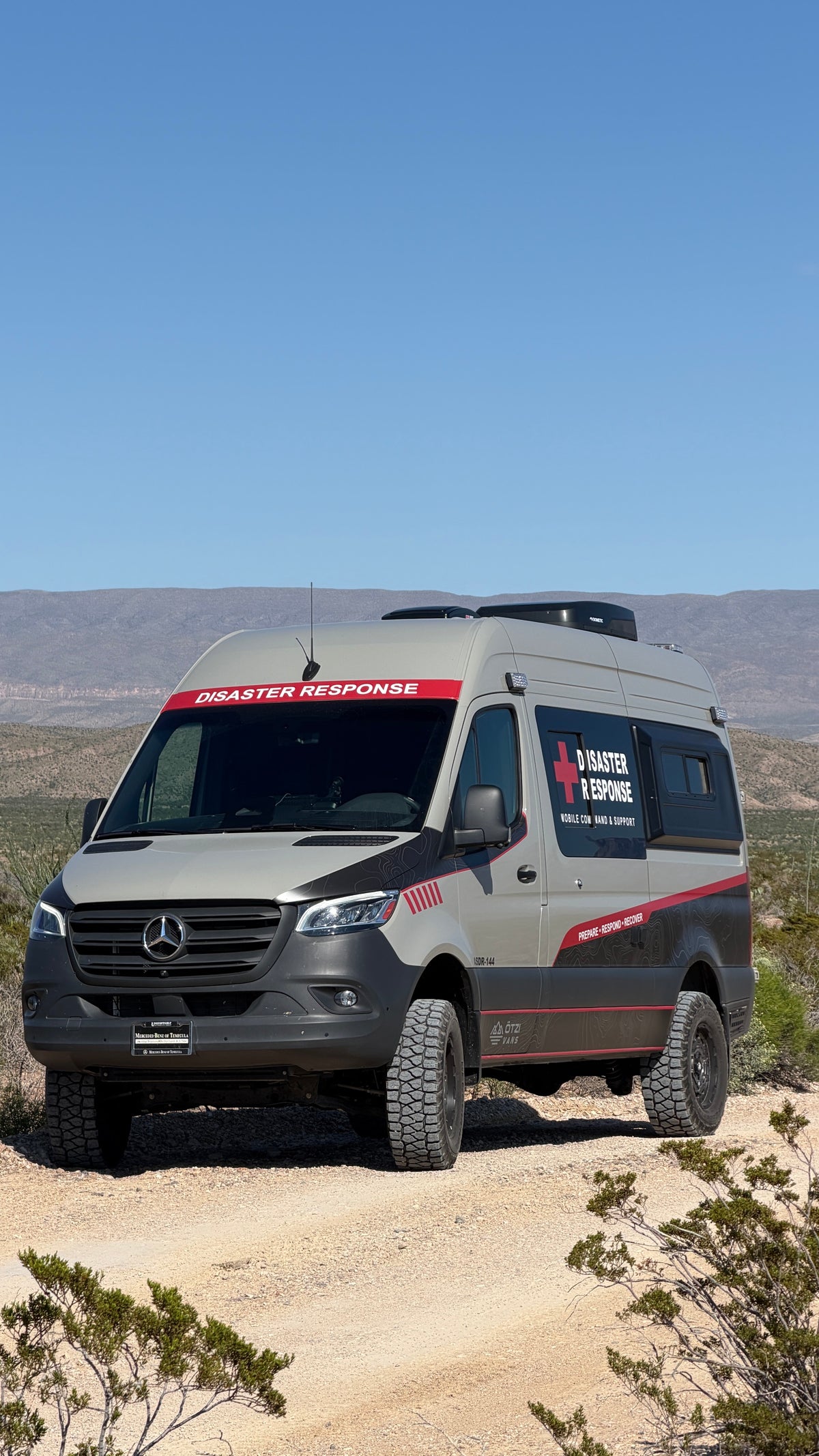
Reaches Terrain Conventional Apparatus Cannot
The vehicle is built on an all-wheel-drive Mercedes-Benz Sprinter with 18" of side ground clearance and armored wheel wells. It reaches terrain that conventional apparatus cannot. An optional Dana 60 rear axle with an electronic locker extends access into the toughest terrain.
Built light, configured around the job. Lightweight construction leaves payload capacity for the people, equipment, and systems the operation needs.
Sustain and Deploy
72 Hours Minimum. No Shore Power Required.
Off-grid capability is designed in from the start, not added later. The onboard LiFePO₄ (lithium iron phosphate) power system recharges from the vehicle and delivers quiet, multi-day power without shore power.
- Expanded 48V LiFePO₄ battery bank for silent operations
- Generator for high-draw equipment
- Integrated heat and A/C for long crew stays in extreme environments
Every vehicle is delivered ready for ICS-aligned mutual-aid deployment and can be shared through EMAC (the interstate mutual-aid compact). It integrates with the equipment your team already carries.
Two Wheelbases
CONFIGURED TO THE MISSION
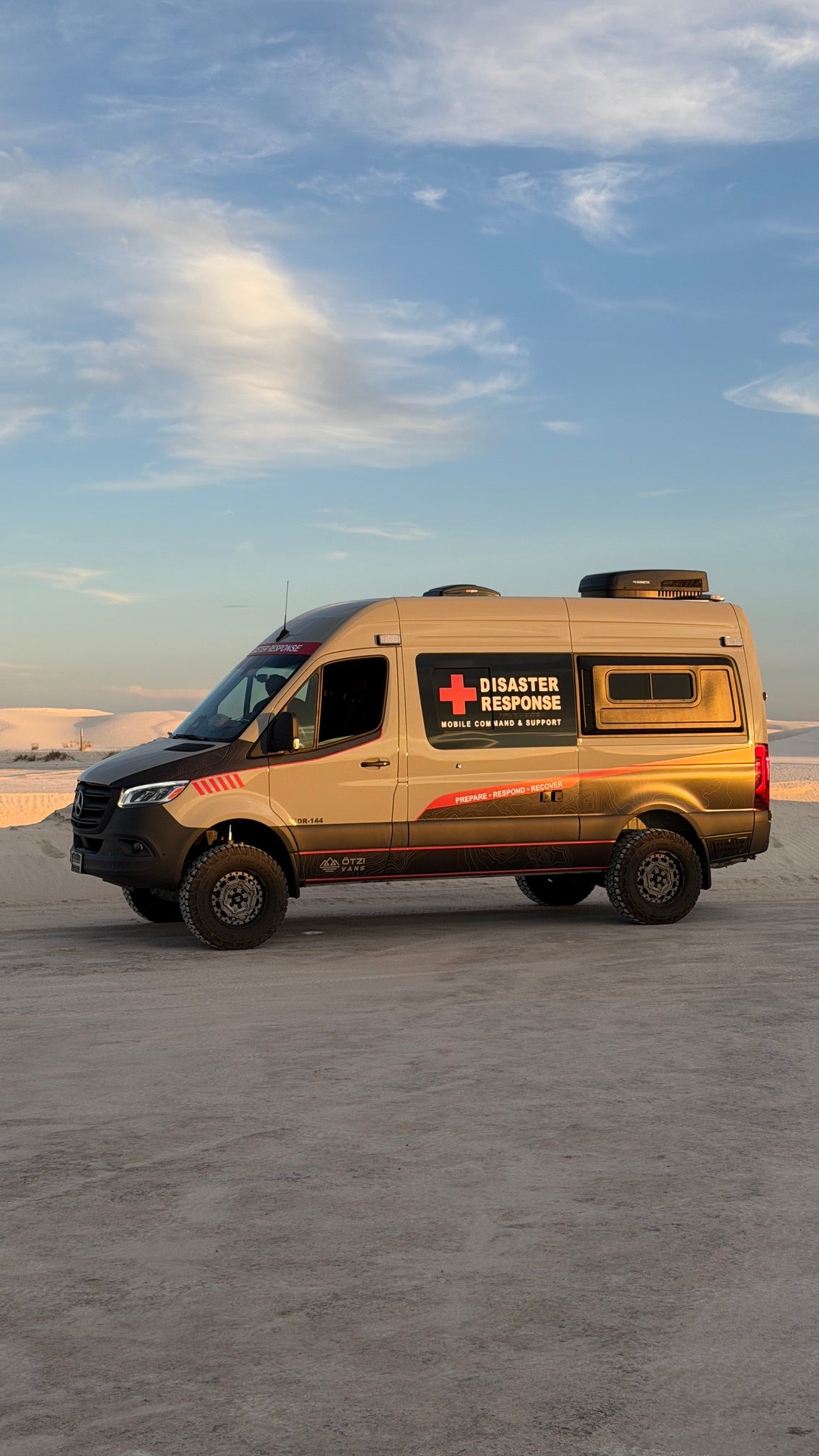
Adapt-Sport 144: compact footprint and agile handling for tight and remote access.
Adapt-Sport 170: larger interior and workspace, with seating for more crew.
Seating for up to 6 or 11 occupants.
Options
Specified to Agency Doctrine
Every vehicle is specified to the buyer’s mission profile, agency doctrine, and existing equipment cache.
- Interior and exterior washdown/shower for decontamination and crew hygiene
- Modular exterior racks and storage
- Scene, perimeter, and warning lighting configured to agency doctrine
- Expanded 48V LiFePO₄ battery bank for silent operations
- Generator for high-draw equipment
- Integrated heat and A/C for extended crew stays
- Dana 60 rear axle with electronic locker
Instead of buying several single-purpose vehicles, you get one asset that covers every mission listed above.
FAQ
What is the Otzi Response Platform?
One off-road, off-grid response vehicle platform offered in two wheelbases, the Adapt-Sport 144 (ASDR-144) and the Adapt-Sport 170 (ASDR-170). Interior systems mount to an aircraft-grade aluminum L-Track system, so a single vehicle covers eight mission profiles instead of a fleet of single-purpose vehicles.
- Personnel transport
- Gear transport
- Mobile command
- Communications
- Medical triage
- SAR staging
- Drone deployment
- Short-term crew shelter
Which agencies and missions is the platform built for?
The platform serves search and rescue, emergency management, wildland and municipal fire, tactical medical, utility restoration, and government fleets. Each vehicle is built around the buyer’s mission profile, agency doctrine, and existing equipment cache.
How long can the vehicle operate without outside support?
Each vehicle is built to support its crew without outside help for a minimum of 72 hours. The onboard LiFePO₄ power system recharges from the vehicle and delivers quiet, multi-day power without shore power. Options include an expanded 48V LiFePO₄ battery bank for silent operations, a generator for high-draw equipment, and integrated heat and A/C for long crew stays in extreme environments.
Can the interior be reconfigured in the field?
Yes. Interior systems mount to an aircraft-grade aluminum L-Track system, and operators can switch between mission profiles in the field with no trip back to the shop: personnel transport, gear transport, mobile command, communications, medical triage, SAR staging, drone deployment, and short-term crew shelter.
What is the difference between the Adapt-Sport 144 and the Adapt-Sport 170?
The Adapt-Sport 144 (ASDR-144) has a compact footprint and agile handling for tight and remote access: urban response corridors, technical off-road access, forest service roads, and staging areas where longer apparatus cannot maneuver. The Adapt-Sport 170 (ASDR-170) has a larger interior and workspace with seating for more crew, for extended-endurance deployments where interior volume, crew capacity, and integrated mission systems matter more than a tight turning radius. Seating is available for up to 6 or 11 occupants.
Is the vehicle ready for mutual-aid deployment?
Every vehicle is delivered ready for ICS-aligned mutual-aid deployment and can be shared through EMAC, the interstate mutual-aid compact. It integrates with the equipment your team already carries.
Who designs and builds the vehicle?
Otzi Vans is an NHTSA-registered final-stage manufacturer in Temecula, California. Every vehicle is designed, engineered, and fabricated in-house, built on an all-wheel-drive Mercedes-Benz Sprinter.
Request a Mission-Profile Consult
Tell us about your agency, mission profile, and existing equipment cache to schedule a mission-profile consult with an Otzi engineer.