
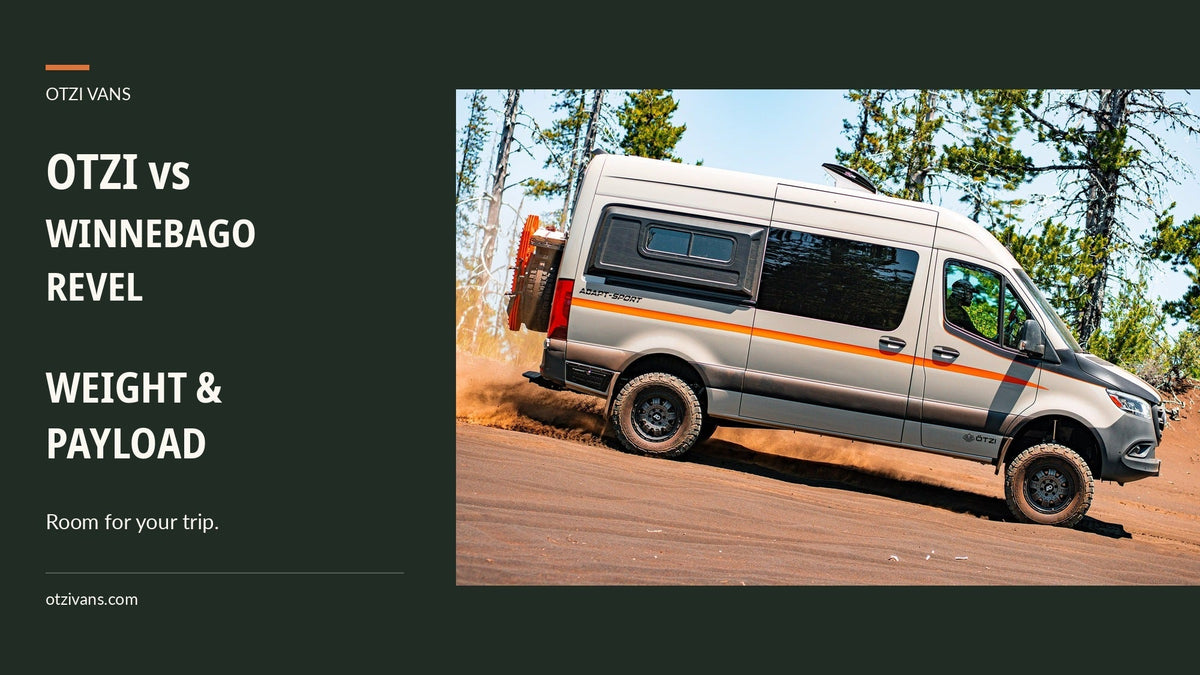
Otzi buyer education / Guide 12
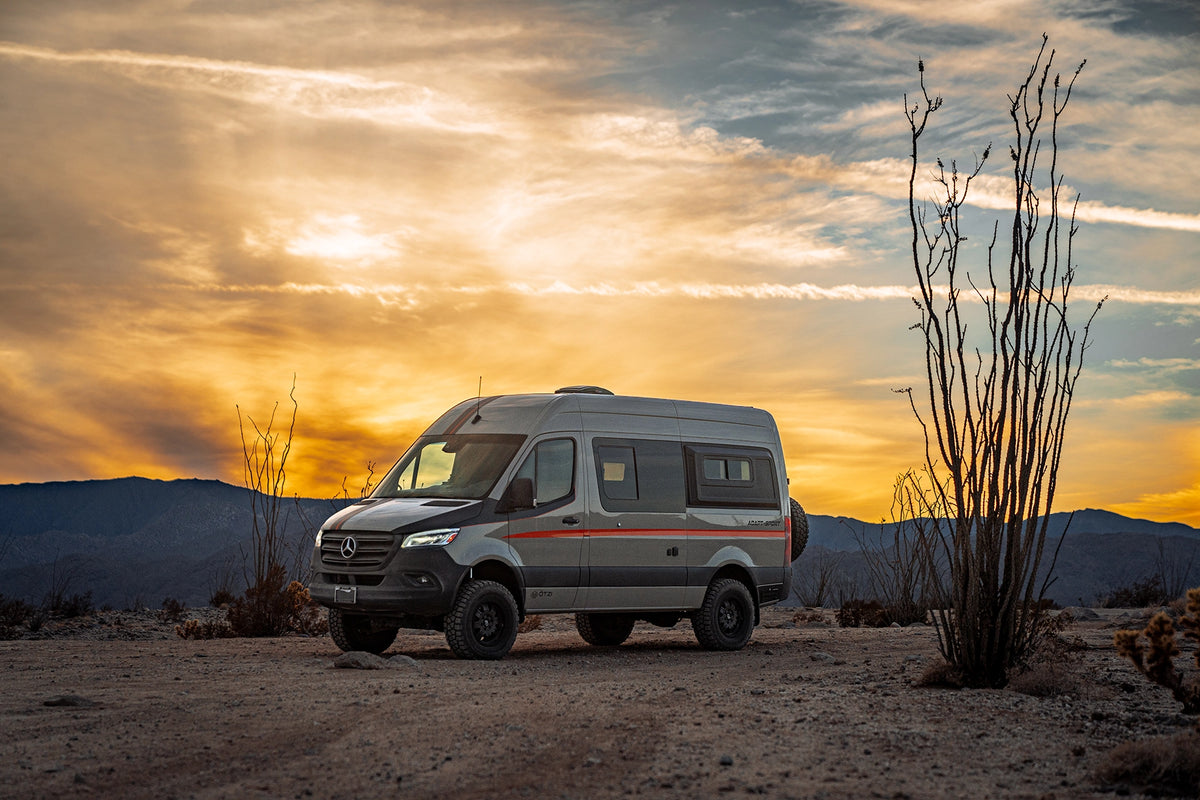
Otzi adventure vans can weigh as light as 6,500 pounds, depending on configuration, with certified and registered vehicle weights. For buyers comparing Winnebago Revel weight and payload, that starting point matters: less weight in the completed build leaves more of the vehicle's rated capacity for passengers, water and equipment.
How much does a Winnebago Revel weigh compared with Otzi?
Revel owners have reported scale weights of 7,740 pounds and 8,540 pounds under different loading conditions. Otzi publishes builds as light as 6,500 pounds, depending on configuration. Read each number with its equipment and loading details, then use the completed vehicle's documentation to plan your own travel load. (Otzi weight guide; Revel owner report, 2022; Revel owner report, 2024)
| Weight reference | Reported figure | What was included |
|---|---|---|
| Otzi production builds | As light as 6,500 lb, depending on configuration | Starting build weight; review the documentation for the selected van. (Otzi) |
| Revel owner report, March 2022 | 7,740 lb at a CAT Scale | Described by the owner as “empty.” The accessible post does not specify the model year or complete fuel, water and equipment conditions. (Revel Weight) |
| Revel owner rcpilgrim, February 2024 | 8,540 lb total | Full diesel, a quarter tank of water, the owner on the scale, tools, cooking equipment, winch/bumper, skid plates and suspension changes. (Weight check) |
These reports make the distinction between starting weight and travel weight concrete. The 8,540-pound example includes equipment and an occupant, so it belongs in a discussion of loaded travel rather than factory curb weight. The owner reported 4,140 pounds on the front axle and 4,400 pounds on the rear. (Revel owner report, 2024)
At Otzi, controlling build weight is part of providing room for the equipment you will actually use. For the wider comparison of living space, systems and ownership, read our Otzi vs Winnebago Revel guide.
Why is 9,050 pounds not the Revel's curb weight?
Winnebago's current Revel specification page lists 9,050 pounds as GVWR, the maximum permitted loaded vehicle weight, for the 44E and 44EC. It is a limit, not a measurement of the completed van. Available carrying capacity depends on the vehicle's actual weight and the loads already included in that measurement. (Winnebago Revel specifications, accessed September 2026)
Three figures serve different purposes:
- Completed vehicle weight: What the finished van weighs under recorded conditions, including its installed equipment.
- GVWR: The permitted total for the loaded vehicle.
- GAWR: The permitted load on each axle, which must be checked separately from the total. (Winnebago 2026 Revel operator manual, Section 9)
The specification page leaves dry weight blank. For a purchase decision, use the van's occupant-and-cargo label and documented weight rather than treating the 9,050-pound rating as its curb weight. Winnebago's manual also notes that factory and dealer options can change the actual vehicle weight. (Winnebago specifications; 2026 operator manual)
That is where a lighter build helps. At the same vehicle rating and weighing conditions, reducing the completed weight leaves a larger allowance for the trip.
What do the owner reports tell you about added equipment?
The loaded Revel report shows how individual equipment choices accumulate: a winch, bumper, skid plates, tools and cookware all contribute to the total. Treat accessories as part of the vehicle's load from the moment they are installed. Include their weight when deciding how much additional equipment to carry. (Revel owner report, 2024)
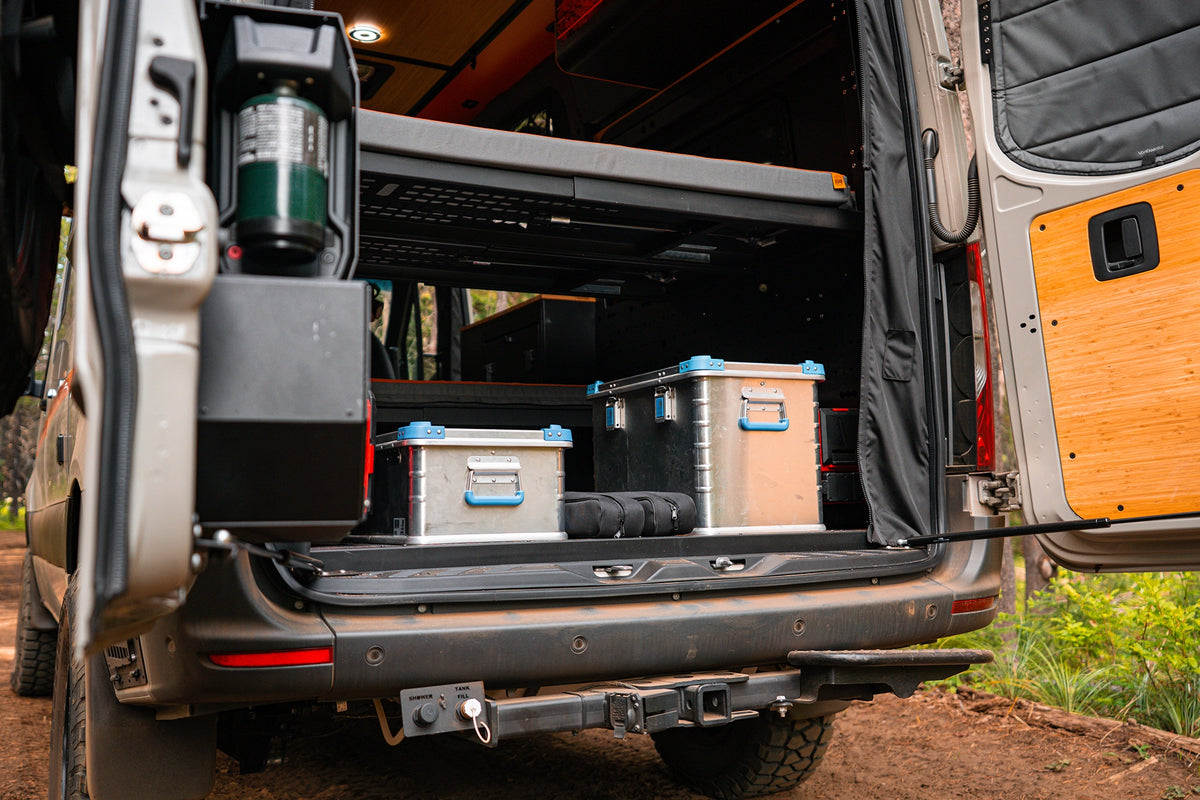
The owner specifically reported approximately 80 pounds of tools in a rear box, along with empty spare containers and other equipment. Those details are more useful for trip planning than a bare total because they show where weight enters an everyday travel setup. (Revel owner report, 2024)
Before adding equipment, ask:
- Purpose: Will you use it regularly, or is it for one occasional trip?
- Complete installed weight: Have you counted the bracket, rack, mounting hardware and contents?
- Location: Which axle carries the added load?
- Existing equipment: Does it replace something already aboard, or duplicate it?
This is also how we approach configuration choices at Otzi. The goal is a well-equipped van with useful capacity, not a long accessory list that dictates what you can pack.
How does weight affect the drive, fuel use and soft-sand travel?
Added equipment changes more than the remaining cargo allowance. A heavier van requires more energy to accelerate and climb, and more energy must be managed when descending. On soft sand, weight also affects how readily the tires sink. These considerations make controlled build weight valuable throughout the journey, not just while packing. (U.S. Department of Energy; OpenStax; Outback Travel Australia)
What does a heavier van ask of the driver and vehicle?
For a comparable drivetrain, additional mass means more work to build speed or climb a hill. A descent brings the other side of that relationship: more gravitational energy must be managed through engine braking, the brakes and other resistance. Weight is therefore relevant to the driving experience even within the vehicle's permitted rating. (U.S. Department of Energy; OpenStax)
The placement of equipment matters too. Queensland Parks' driving guidance recommends packing heavy items low and distributing the load evenly. (Queensland Parks and Wildlife) Consider where tools, water and other dense equipment will travel when reviewing your Otzi configuration.
Why does avoiding unnecessary weight support fuel economy?
The U.S. Department of Energy recommends reducing unnecessary vehicle weight to improve fuel economy. A permanent accessory contributes to the load whether you use it that day or not. Starting with a weight-conscious build and choosing equipment around actual use addresses that load on every trip. (FuelEconomy.gov)
Consumption also depends on speed, terrain, wind resistance and driving style. Lightweight construction is one practical part of an efficient travel setup, alongside sensible driving and carrying the supplies the route requires. (FuelEconomy.gov; U.S. Department of Energy)
How does weight influence capability in sand?
In comparable sand conditions and with comparable tire support, additional weight tends to push the tires farther into the surface, increasing the sand they must move through. Outback Travel Australia's dune-driving guidance specifically recommends lighter vehicles and avoiding unnecessary loads. Reducing weight helps flotation instead of relying only on traction equipment. (Outback Travel Australia)
Match tire-pressure decisions to the actual load and vehicle and tire guidance. Reduced pressures require low speeds and careful steering, followed by reinflation before harder or paved surfaces; overly deflated tires can roll off their rims during fast or sudden maneuvers. (Queensland Parks and Wildlife)
Otzi's 6,500-pound starting weight, depending on configuration, supports a lighter approach before your trip equipment is added. The goal is a comfortable, capable travel setup, not simply to replace every pound saved in construction with another accessory.
How does Otzi combine lighter construction with everyday comfort?
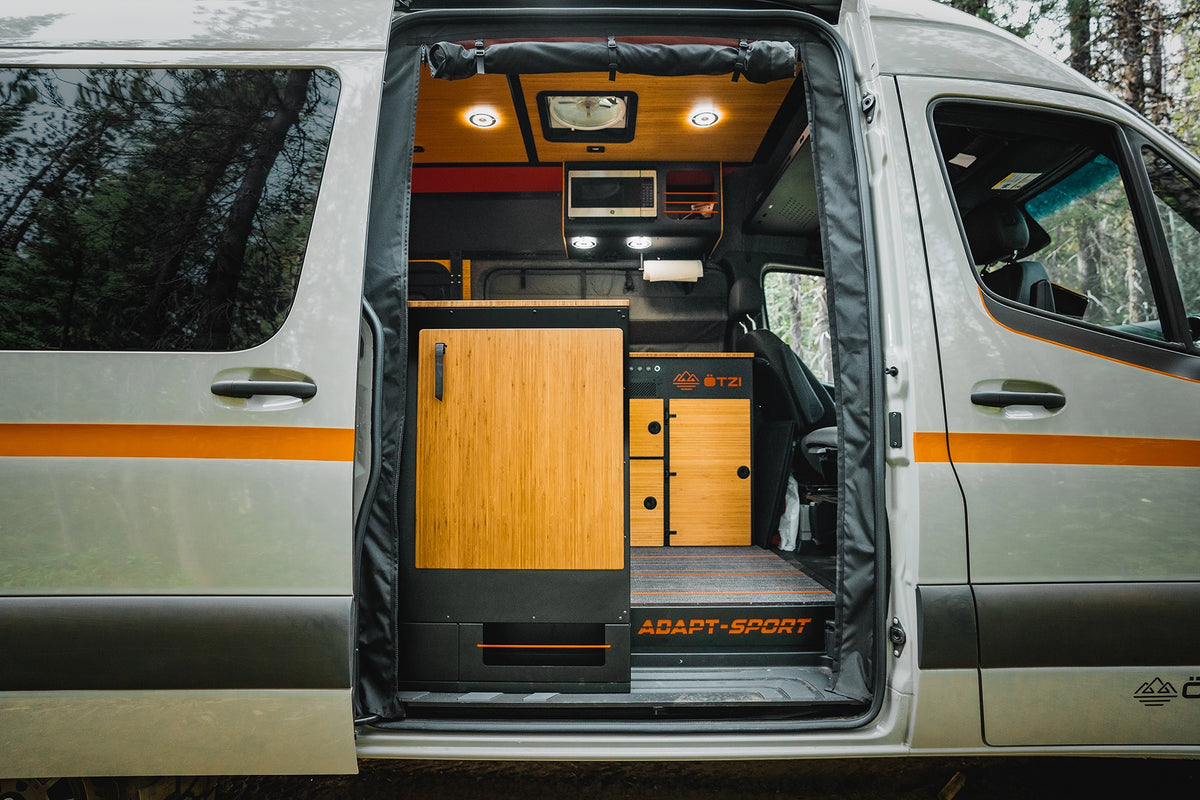
The Adapt-Sport 144 uses powder-coated aluminum cabinetry and an adaptable interior while retaining everyday equipment such as refrigeration, induction cooking and a microwave. Lightweight construction is considered alongside the living experience. You can keep a comfortable sleeping area, prepare meals and organize equipment without treating the van as an empty cargo shell. (Otzi Adapt-Sport 144)
Our removable, expandable Lifestyle Bed System can remain set up as a dedicated bed. Reconfiguring it is an option when your plans change, not a daily requirement. The Adapt-Sport 144 also provides a 78-cubic-foot garage, giving you space to organize equipment beneath the bed.
Storage volume and payload answer separate questions: will the equipment fit, and can the vehicle carry its weight within the relevant limits? A roomy garage works best with a realistic loading plan.
Power selection follows the same approach. The 144's published system provides 2,048 Wh, expandable to 5,048 Wh. Choose capacity around the appliances you use and the charging available during your trips, rather than automatically installing the largest bank. (Otzi Adapt-Sport 144)
How should you plan water capacity and travel weight?
Otzi separates everyday sink water from optional shower storage. The galley uses a removable six-gallon fresh-water container; choosing the shower adds a separate 35-gallon fresh tank. This gives you control over both the equipment installed and the water carried, while keeping the sink container accessible for cleaning and filling.
| Water system | Fresh-water capacity | Practical use |
|---|---|---|
| Otzi galley | 6 gallons | Removable tank for sink use; can be filled with your preferred filtered drinking water. (Otzi 144) |
| Otzi optional shower | 35 gallons, separate from the sink supply | Adds shower storage when that equipment is selected. |
| Otzi with shower option | 41 gallons combined | Separate sink and shower supplies; choose the fill level for the trip. |
| Current Revel 44E/44EC | 35 gallons | Published fresh-water capacity. (Winnebago specifications) |
Otzi's sink also has a removable six-gallon gray-water container, while the shower configuration adds a separate 16-gallon gray tank. Include wastewater still aboard when planning the return journey; using fresh water does not remove its weight from the vehicle if it remains in a holding tank.
For shorter trips with reliable refill access, you may not need every tank full. For remote travel, water reserves may be essential. Decide around the route and refill opportunities, then include that amount in the travel load.
What does a practical payload worksheet look like?
Start with a documented completed weight and record what it already includes. Then add passengers, water and trip equipment without counting fuel or installed options twice. The example below shows the process for a van weighed with full fuel and selected equipment, before occupants, water and removable travel gear.
How does the remaining allowance change as you pack?
For this illustrative worksheet, use a 7,000-pound completed vehicle and a 9,050-pound GVWR. That leaves 2,050 pounds before the listed trip load. Substitute the certified weight and rating of the actual van you are evaluating; Otzi's 6,500-pound starting configurations provide an earlier reference for the build-selection stage.
| Planning item | Illustrative weight |
|---|---|
| Completed van, full fuel and selected installed equipment | 7,000 lb |
| Two adults | 360 lb |
| Water carried | 100 lb |
| Clothing, bedding, food and cooking supplies | 180 lb |
| Bikes and removable carrying equipment | 120 lb |
| Tools and other trip supplies | 90 lb |
| Total added trip load | 850 lb |
| Loaded total | 7,850 lb |
| Remaining gross-weight allowance | 1,200 lb |
The remaining total is one check, not the whole loading plan. Weigh the front and rear axles and compare them with their ratings, then check tire loading. Winnebago's manual calls for checking total, axle and individual tire limits and includes options, passengers, water, fuel and luggage in the loaded vehicle weight. (Winnebago 2026 operator manual, Section 9)
Keep this worksheet with your equipment list. Revisit it after adding a rack, changing the battery configuration or packing for a longer trip.

What should you review before ordering your Otzi?
Review the selected build's weight documentation alongside the equipment list, then walk through how you will use the interior. This connects the carrying capacity to the living experience: passengers, sleeping arrangements, cooking, water and equipment all belong in the same conversation before the configuration is finalized.
Bring a short list of your usual gear and discuss:
- Build documentation: Completed weight, weighing conditions and vehicle ratings.
- Passenger needs: Approved travel seats and restraints for everyone aboard.
- Storage: Where bikes, bags and heavier equipment will be secured.
- Water and power: Capacity suited to the duration and style of your trips.
- Sleeping and daily use: Whether you will leave the bed made up or use other arrangements.
The Adapt-Sport combines lightweight construction with a complete living space and equipment choices within a production platform. Explore the Adapt-Sport 144, then arrange an Otzi walkthrough to review a configuration around your trips.
Frequently asked questions
How much does a Winnebago Revel weigh?
Historical owner reports include 7,740 pounds at a CAT Scale in a March 2022 post and 8,540 pounds in a February 2024 post. The latter included full fuel, partial water, the owner and added equipment. Use those stated conditions when comparing the figures. (2022 report; 2024 report)
How does Otzi's weight compare?
Otzi builds can weigh as light as 6,500 pounds, depending on configuration, with certified and registered vehicle weights. The lighter starting build preserves more of the vehicle's rated capacity for travel loads. Use your selected configuration's completed weight when calculating the allowance for your trip. (Otzi weight guide)
Is the Revel's 9,050-pound figure its empty weight?
No. Winnebago lists 9,050 pounds as GVWR for the current Revel 44E and 44EC, meaning the maximum permitted loaded vehicle weight. The cited specification page leaves dry weight blank. The actual vehicle's labels and documented weight are the basis for loading calculations. (Winnebago specifications)
Do accessories reduce the capacity available for passengers and gear?
Yes. Added equipment contributes to the loaded vehicle weight, including racks, boxes, mounting hardware and their contents. Account for it once, either in the completed scale weight or as an additional load. Check total and axle limits after changing the setup. (Winnebago 2026 operator manual)
Can an Otzi have a shower and substantial water storage?
Yes. The optional shower configuration adds a 35-gallon fresh-water tank and 16-gallon gray tank. The sink retains separate removable six-gallon fresh and gray containers, providing 41 gallons of combined fresh-water capacity when the shower option is installed.
Does the Otzi bed need to be packed away every day?
No. The removable, expandable Lifestyle Bed System can remain set up as a dedicated bed. You can change the arrangement when needed, while the Adapt-Sport 144's 78-cubic-foot garage provides space for equipment beneath it.
Explore Otzi adventure vans
- Adapt-Sport 144: Review the production platform and equipment.
- Revel comparison: Compare the full living and ownership experience.
- Visit Otzi: Discuss your build and arrange a walkthrough.