
The Otzi advantage / Comparison 06
Our Otzi vs The Vansmith recommendation is a production van with flexibility built into ownership, not confined to the order sheet. Adapt-Sport combines configurable sleeping, lounging, seating and table arrangements with modular storage and accessible interior components (Otzi Adapt-Sport 144). That is our case for choosing Otzi before committing to a tailored floor plan.
We build the Adapt-Sport, so this is our first-party explanation of why we recommend it. Competitor specifications below come from The Vansmith's published pages; Otzi configuration details reflect our current product information.
This guide uses The Vansmith’s current public product pages, checked in September 2026. It compares Sprinter offerings with Otzi’s Adapt-Sport production models; The Vansmith also advertises Transit-based tailored models, which should not be silently treated as the same chassis. (Vansmith tailored models)
Which Vansmith models should you compare with Otzi?
For a compact Sprinter comparison, begin with Bivy Classic, Plus, and Deluxe, which The Vansmith’s comparison page places on the Sprinter 144 AWD. For a tailored interior, examine the Duo or Family series by wheelbase and equipment rather than treating “a Vansmith” as a single specification. (Vansmith Bivy comparison, Vansmith tailored models)
The Bivy lineup is especially useful because its published trim steps make the buying decisions visible:
- Classic establishes the core sleeping, galley, water, and electrical package.
- Plus adds selected comfort equipment and more battery capacity.
- Deluxe adds a larger electrical package, hydronic heating, air conditioning, a bench shower, and suspension equipment.
Those distinctions come from The Vansmith’s current comparison chart, which also says its recommended configurations can be customized. Confirm the selected trim and installed options in your quote. (Vansmith Bivy comparison)
The Duo XL product page identifies Sprinter 170 or Transit 148 Extended platforms and advertises a conversion-only price. Bivy Classic's headline says the vehicle is included, but its FAQ says conversion only. Resolve that discrepancy in a written quote rather than assuming the headline and FAQ describe the same purchase. (Vansmith Duo XL, Vansmith Bivy Classic)
For a longer Otzi alternative, investigate the Adapt-Sport 170 rather than forcing a larger Vansmith into a compact-van comparison.
What are the biggest equipment differences?
The clearest published differences are battery capacity, water arrangements, interior materials, and how the living space changes. Compare an actual Bivy trim against an actual Otzi configuration; otherwise, it is easy to price a Vansmith base package while picturing its Deluxe equipment.
| Decision | Otzi Adapt-Sport 144 | The Vansmith Sprinter reference |
|---|---|---|
| Core layout | Removable, expandable Lifestyle Bed System that can remain set up; 78-cubic-foot garage. Explore the layout | Bivy has a removable near-queen bed that expands toward near-king size. Bivy comparison |
| House battery | 2,048 Wh, expandable to 5,048 Wh. Otzi | Classic 5 kWh; Plus 10 kWh; Deluxe 15 kWh. Bivy comparison |
| Solar specification | Up to 1,400 W charging input capacity, not installed-panel output. Otzi | Classic product page lists 300 W solar. Bivy Classic |
| Fresh water | Removable 6-gallon sink tank; optional shower adds a separate 35-gallon fresh tank. | Bivy comparison lists 20 gallons across the three compact trims. Bivy comparison |
| Gray water | Removable 6-gallon sink tank; optional shower adds a separate 16-gallon gray tank. | Bivy lists 5 gallons under the sink; Deluxe adds a 16-gallon undermounted tank. Bivy comparison |
| Interior approach | Powder-coated aluminum structures and bamboo accents, with interior finish options within our production platform. Explore Otzi | Bivy lists upholstered walls, a cedar ceiling, and bamboo countertop; Duo XL lists prefinished birch walls and ceiling. Bivy, Duo XL |
| Cold-weather and bathroom design | Heated batteries, heated water tanks and insulated lines; optional shower configuration. | Plus lists diesel cabin heat and exterior shower; Deluxe adds hydronic heat and bench shower. Bivy comparison |
| Suspension | Request the ordered configuration; the product page lists an Evictus PreRunner suspension option. Otzi | Bivy Deluxe comparison lists Van Compass 4.3; Duo XL lists a Stage 4/4.3 upgrade. Bivy, Duo XL |
| Warranty | One year/unlimited miles, with optional five-year/unlimited-mile extended coverage. Written terms govern. | Lifetime cabinet warranty for original owner; component warranties; Family XLS page also states a two-year workmanship warranty. Obtain the applicable contract. Duo XL, Family XLS |
Our recommendation is to evaluate the complete van, not reward the longest equipment list. Otzi's layout, water choices and compact systems are designed to work together without requiring equipment you will not use.
What does the Bivy trim ladder reveal about equipment comparisons?
The Bivy trim ladder shows why a package name is not a complete specification. The Vansmith publishes 5, 10 and 15 kWh for Classic, Plus and Deluxe, with changes to heating, bathroom equipment and chassis accessories (Vansmith Bivy comparison). Compare those installed systems accurately, then evaluate Otzi's full interior and ownership approach rather than declaring a winner by trim level.
Classic's product page lists a 60-inch galley, an 80-liter refrigerator/freezer, a stowable induction cooktop and a 6-inch memory-foam mattress (Vansmith Bivy Classic). These dimensions and appliances describe the package. They do not, by themselves, establish how well its complete layout supports the activities you want from your van.
However, the Classic page places cabin heating, water heating, air conditioning, and shower additions among available upgrades. Do not interpret “four-season insulation” as a promise that the base configuration includes every system needed for your winter trip. (Vansmith Bivy Classic)
Plus lists diesel cabin heat, an exterior shower, a dry-flush toilet, window covers and an awning alongside the larger battery (Vansmith Bivy comparison). Keep those inclusions separate from Classic when comparing quotes. Standard equipment and optional additions must remain clearly identified on every configuration being considered.
Deluxe adds an interior bench shower, air conditioning, hydronic heat and suspension equipment in the current chart (Vansmith Bivy comparison). An appropriately optioned Adapt-Sport matches the upper-trim equipment offering discussed here. Compare equipped vans, not a fully optioned Bivy against a base Otzi; matching amenities does not mean identical components or battery capacities.
Otzi's advantage is how those options work within the production interior: configurable living space, compact systems and accessible components. Our 144 page identifies comfort and suspension additions as options; select the package you want without treating more standard equipment in a competitor's upper trim as a capability Otzi lacks. (Otzi Adapt-Sport 144)
Which interior stays useful when your trips change?
Otzi is our recommendation when the same van needs to accommodate several different activities over time. Its Lifestyle Bed System can create raised sleeping space over equipment, lower sleeping arrangements, lounges, seating, and tables without commissioning a new interior. That is the central reason to put it beside a tailored Vansmith. (Otzi Adapt-Sport 144)
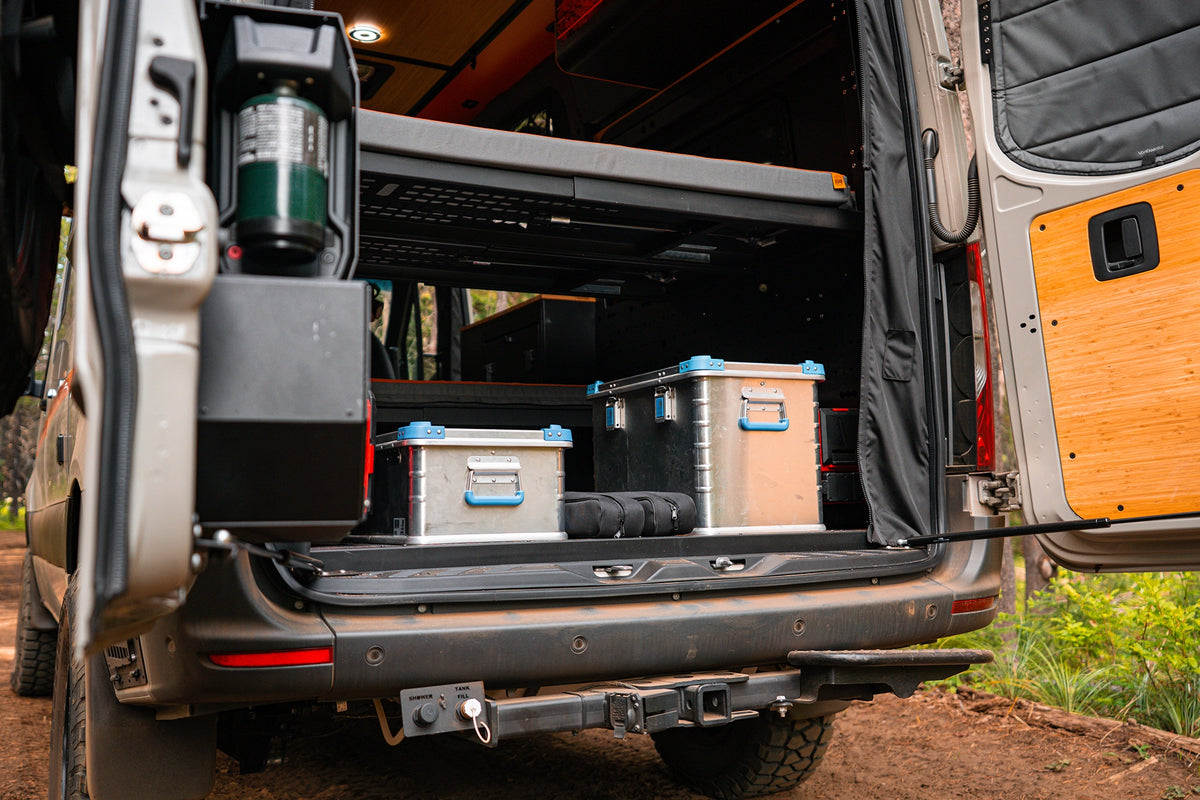
The Adapt-Sport 144 provides a 78-cubic-foot garage, and its removable, expandable bed can stay made as a dedicated bed. Reconfiguration is an additional capability, not a daily chore. Keep your preferred sleeping setup and use the space below for equipment; change or remove the bed when the trip calls for it.
Bivy also has a removable, expandable bed, so those capabilities are not exclusive to Vansmith. Otzi adds the range of sleeping, lounging, seating and table arrangements built around our Lifestyle Bed System. Compare the actual steps and storage access with both beds in everyday positions. (Bivy comparison, Otzi layout)
Ask for a demonstration using your equipment, not empty cabinets. Bring a bike or representative dimensions, ski bags, storage boxes, and the dog bed. Establish both the driving configuration and the evening arrangement.
For family use, verify travel seating independently of sleeping capacity. The Family XLS page advertises seating for up to five with three-point belts and optional bunk and pop-top arrangements, but its different page sections describe sleeping capacity differently. Get a written seat-and-bed plan for the exact configuration. (Vansmith Family XLS)
The same discipline applies to Otzi. A lounge or sleeping position should never be counted as an approved travel seat merely because it looks comfortable.
How much battery capacity should influence the decision?
Battery capacity matters when your loads need it, but it should not overrule the rest of the vehicle. The Bivy Deluxe’s published 15 kWh system offers substantially more nominal storage than Otzi’s published 144 base system of 2,048 Wh; those packages are designed around different equipment choices. (Vansmith Bivy Deluxe, Otzi Adapt-Sport 144)
Otzi deliberately pairs a compact power package with efficient appliances and an insulated cabin. That approach supports our lightweight design instead of treating battery size as the goal. Larger nominal storage is real, but usable camping time also depends on appliance loads, weather, charging and how you operate the van.
Our 144 system uses a self-contained 48V architecture, offers 2,500 watts of continuous output, and expands to 5,048 Wh. We select appliances around the system rather than installing a larger inverter simply to advertise a larger number. Actual inverter heat depends on load and efficiency, not its output rating alone. (Otzi Adapt-Sport 144)
The Bivy comparison chart is the basis for the 5/10/15 kWh trim figures here. Individual product-page FAQs and equipment lists contain different battery figures, so have The Vansmith confirm the ordered system in writing. Do not combine the largest advertised battery with the lowest-priced configuration. (Bivy comparison, Bivy Classic, Bivy Deluxe)
Keep charging capacity separate from storage. The Bivy Classic lists 300 watts of solar, while Deluxe lists a secondary alternator in addition to its larger battery; ask for the actual installed charging hardware and documented operating conditions. (Vansmith Bivy Classic, Vansmith Bivy Deluxe)
Prepare two energy budgets: a mild-weather weekend and a demanding trip with your chosen cooling, cooking, and work equipment. Have the seller identify usable capacity, inverter limits, charging assumptions, and the reserve built into the recommendation.
What do the water and shower choices change?
Otzi separates the sink's removable water supply from the optional shower system. The sink uses 6-gallon fresh and gray tanks, while adding the shower adds a separate 35-gallon fresh tank and 16-gallon gray tank. That gives you shower capacity without treating the sink tank as the entire van's water supply.
Removable sink tanks can be taken out for cleaning and filled with your preferred filtered drinking water. This does not imply that a filtration system is included. It means you control what goes into the sink supply and can maintain it independently of the shower's water system.
Look past the presence of a shower icon. Bivy Plus lists an exterior shower with a curtain and electric water heating. Deluxe adds a bench-shower arrangement, an undermounted gray-water tank, and Rixen hydronic space and water heating. (Vansmith Bivy comparison)
Ask the builder to set up the bench shower from its normal travel position. Find out where cushions go, how the curtain dries, and whether another traveler can use the kitchen during setup.
The Duo XL page offers several toilet types and an optional 30-gallon fresh-water arrangement, while warning that the larger water option reduces bunk-bed size if that bed is selected. That is a useful example of one upgrade changing another part of the layout. (Vansmith Duo XL)
The compact Bivy comparison lists 20 gallons fresh across its three trims. Compare that with the actual Otzi configuration, not just our portable galley tank. The choice to omit unused shower equipment is itself useful: you avoid carrying the equipment and water associated with a system you do not need. (Bivy comparison)
A fixed enclosed shower reserves its footprint even when nobody is bathing. That matters when comparing enclosed-bathroom layouts such as Family XLS, but Bivy Deluxe's bench shower is a different design and should not be described as a permanent shower enclosure. See how each system affects the room before, during and after use. (Family XLS, Bivy comparison)
Does insulation or cabinet material prove one van is better built?
No single material proves the finished van’s comfort or durability. Otzi describes powder-coated aluminum structures with bamboo accents; the Bivy comparison lists upholstered walls, a cedar ceiling, and Havelock wool insulation, while Duo XL lists synthetic insulation with wool available as an upgrade. (Otzi, Bivy comparison, Duo XL)
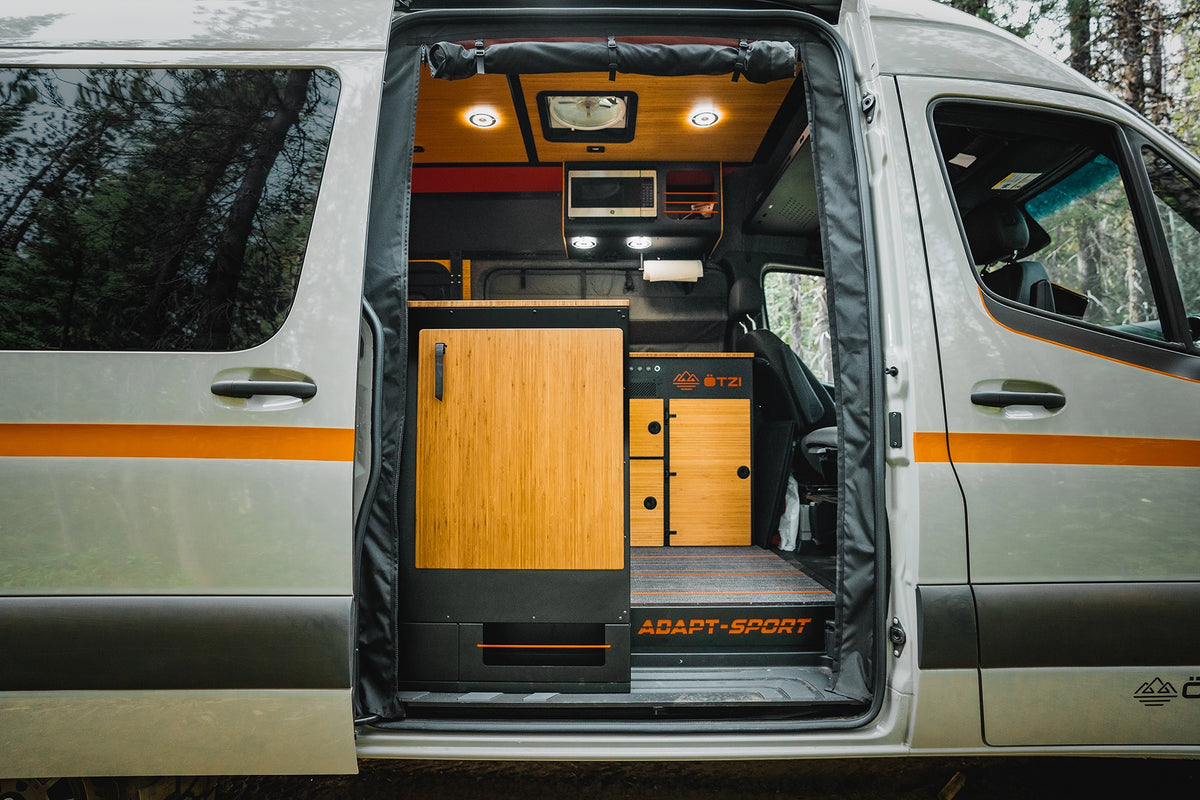
We build around powder-coated aluminum and accessible systems behind removable panels. Our L-track-mounted wall and ceiling panels provide access for wiring and equipment changes, making service access part of the design rather than an afterthought. (Otzi Adapt-Sport 144)
Otzi also offers interior finish choices, so a production-built Adapt-Sport does not mean one fixed interior appearance. Personalize the finishes while retaining our production-engineered platform. Duo XL lists cabinet, countertop, upholstery and ceiling alternatives, but finish choices alone do not establish superior durability or serviceability. (Vansmith Duo XL)
Inspect the details behind the aesthetic. Open cabinets, locate service panels, inspect accessible plumbing connections, and ask how damaged surfaces are replaced. Request information about insulation continuity around windows, doors, wheel wells, and any body extensions.
Evaluate insulation together with the heater, ventilation and protected water systems. Ask for the heater specification, water-system limitations, ventilation instructions, and expected behavior when parked in the conditions you intend to use.
Otzi also provides heated batteries, heated water tanks and insulated water lines for cold-weather use. Review heater power requirements, operating procedures and winterization with our team for the conditions you expect.

How should you evaluate loaded weight and rough-road equipment?
Otzi's lightweight approach starts with the vehicle you will actually use, including its equipment and cargo. Our vans can weigh as light as 6,500 pounds, depending on configuration. That is a meaningful design priority, but the exact completed van's weight and axle ratings still determine its remaining loading allowance. (Otzi 2026 guide)
The Bivy pages reviewed do not establish a comparable completed-vehicle curb weight, and we have not identified an attributable owner scale report suitable for this comparison. Request front-axle, rear-axle and total scale readings with loading conditions recorded. (Bivy Classic, Bivy Deluxe)
The Vansmith’s Deluxe comparison lists Van Compass 4.3 suspension, while Duo XL offers Stage 4/4.3 as an upgrade. Confirm the suspension package on the vehicle you are ordering. (Bivy comparison, Duo XL)
Otzi publishes builder-stated clearance of 11.5 inches at the centerline, 9.5 inches at the rear differential, and 18 inches at the side rail or midpoint, with no wheel spacers. Ask how those measurements apply to the vehicle you are ordering and its loading condition. (Otzi engineering comparison)
Check the same locations on each candidate. Include steps, tanks, rear carriers, and hitch-mounted equipment in your inspection. A useful suspension test should reflect how you travel, not an empty demonstration van.
How does Otzi support long-term ownership?
Otzi provides a one-year/unlimited-mile warranty, with optional five-year/unlimited-mile extended coverage. Unlimited mileage keeps distance traveled from becoming that warranty's mileage cutoff; it does not eliminate coverage conditions or exclusions. Combine the written protection with our accessible interior design and a clear service process before you finalize your order.
The Vansmith advertises a lifetime cabinet warranty for the original owner, component manufacturer warranties, and a two-year workmanship warranty in its Family XLS FAQ. Those cover different categories. Its two-year workmanship duration exceeds Otzi's standard one-year term, while Otzi's optional five-year protection deserves comparison on actual scope, not duration alone. (Vansmith Duo XL, Vansmith Family XLS)
Ask which installed parts remain subject to their original manufacturer's terms. Neither a lifetime cabinet warranty nor an extended build warranty should be assumed to cover every appliance, wear item or service expense.
Before signing, ask who diagnoses a fault, who pays diagnostic labor, which repairs require prior approval, and what happens if you are far from Boulder. Obtain the same answers from Otzi.
Request the completed vehicle's registration and certification documents alongside its warranty. Financing, insurance and campground admission have separate requirements; obtain approval for the actual vehicle rather than assuming a label guarantees acceptance everywhere.
Otzi describes itself as a licensed and certified second-stage RV manufacturer. Ask for the documentation and vehicle label supporting the finished van you are buying, rather than treating different registration and certification terms as interchangeable. (Otzi product FAQ)
What should a useful test drive and quote include?
A useful evaluation ends with a complete configuration and a clear support path. Ask both builders to demonstrate the vehicle as you intend to use it, then document the equipment, loading assumptions, delivery timing, and warranty before you compare the final offers.
Bring a practical checklist:
- Confirm chassis, wheelbase, drivetrain, model year, and approved passenger positions.
- Demonstrate bed changes with representative equipment inside.
- Verify battery storage, inverter limits, charging hardware, and installed solar separately.
- Operate the shower, toilet, heater, and water drains if included.
- Review actual loading labels, scale information, and access for maintenance.
- Obtain the warranty, service-authorization process, and itemized delivered price.
Be especially careful with schedule promises. The Vansmith’s Classic page advertises an 8-to-10-week lead time, while its Deluxe page lists 6 to 9 months; other site sections use different build-timeline descriptions. Ask for a dated, configuration-specific schedule rather than choosing the shortest number on the website. (Bivy Classic, Bivy Deluxe)
Our recommendation is Otzi for a production design that remains adaptable after the order is complete. Use the walkthrough to experience sleeping, relaxing, meals and work as well as loading equipment. Then let our team document the model, available options and support arrangements that turn that demonstration into your own van.
What are the most common questions about Otzi versus The Vansmith?
The questions below address equipment and ownership differences that a general brand comparison can miss. Use them to narrow the configuration before discussing price.
Which Vansmith model is closest to the Adapt-Sport 144?
The compact Bivy Classic, Plus, and Deluxe are useful starting points because The Vansmith lists them on the Sprinter 144 AWD. Compare the actual equipment and loading documents rather than the model names alone. (Vansmith Bivy comparison)
Does Bivy Classic include heat and a shower?
The current Classic product page lists cabin heating, water heating, and shower additions as upgrades rather than included equipment. Bivy Plus and Deluxe add different heating and bathroom packages. (Bivy Classic, Bivy comparison)
How do the warranties compare?
Otzi provides one year/unlimited miles, with optional five-year/unlimited-mile extended coverage. The Vansmith advertises lifetime cabinet coverage for the original owner, component manufacturer warranties and a two-year workmanship warranty. Compare the scope, exclusions and service authorization requirements in the written agreements. (Duo XL, Family XLS)
Is The Vansmith’s advertised conversion price a complete van price?
Not necessarily. Duo XL excludes the base vehicle. Bivy Classic's headline includes it, but its FAQ says conversion only. Obtain an itemized written quote identifying the chassis, conversion and upgrades before comparing delivered prices. (Duo XL, Bivy Classic)
Which van is better for changing sports and gear?
We recommend Otzi because its removable, expandable Lifestyle Bed System supports sleeping, seating, table and gear-storage arrangements (Explore Otzi). The Adapt-Sport 144 also provides a 78-cubic-foot garage. Leave the bed set up and use its flexibility when you want to, rather than rebuilding your sleeping space every night.
Is Otzi limited to six gallons of water?
No. The sink uses separate removable 6-gallon fresh and gray tanks. Choosing the optional shower adds a separate 35-gallon fresh tank and 16-gallon gray tank for that system. This keeps the cleanable sink supply independent while letting you select shower equipment rather than carrying it by default.
How can you compare an Otzi with your Vansmith shortlist?
Explore the Adapt-Sport 144 and Adapt-Sport 170, then contact Otzi with the Vansmith configuration you are considering. Bring your equipment list and ask for a demonstration of sleeping, storage, utility access, and living space.
Our case for Otzi is a complete production design: living space that can adapt, a bed that can stay ready, practical gear storage and systems selected around actual use. Experience those details in person, then let our team specify your Adapt-Sport and document the equipment, support and delivered price.