
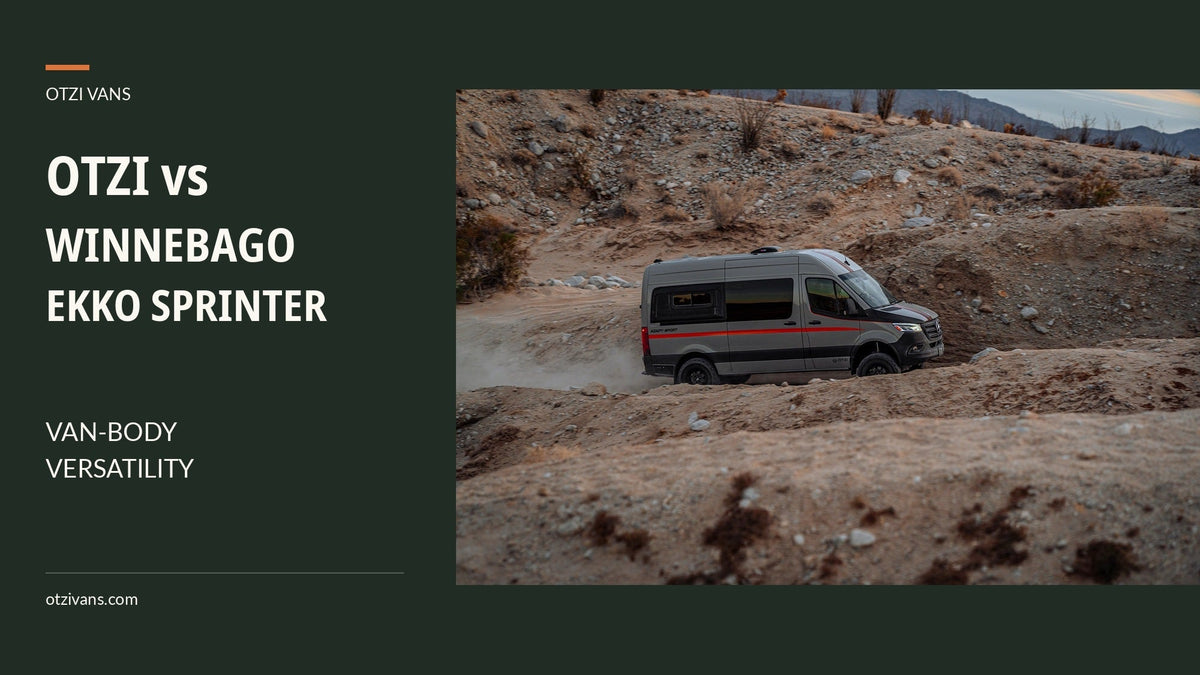
Otzi buyer education / Guide 14
Otzi's Adapt-Sport combines comfortable living and adaptable gear storage within the original Sprinter van body. When comparing Otzi vs EKKO Sprinter, look beyond the campsite floorplan: the vehicle also needs to work at trailheads, in your driveway and between destinations. Our approach is to make the interior do more within the van format.
What is the difference between a van conversion and the EKKO Sprinter?
The Adapt-Sport builds its living space inside a Mercedes-Benz Sprinter van. Winnebago categorizes the EKKO Sprinter as a Class C motorhome, with a dedicated coach body behind the cab. That difference shapes the exterior dimensions, loading access and division of interior space before individual appliances or accessories enter the comparison. (Otzi Adapt-Sport; Winnebago EKKO Sprinter)
We favor the van format because an adventure vehicle should be useful throughout the trip. You need to load equipment, stop for supplies, park for a hike and settle in for the night. The interior and exterior should work together through that whole sequence.
This guide focuses on the 2026 EKKO Sprinter 23B, not the Ford Transit EKKO 22A. Winnebago's equipment tables contain some model-specific entries for both, so the chassis and floorplan designation matter when reading a specification. (Winnebago 2026 specifications)
How do the dimensions affect your everyday footprint?
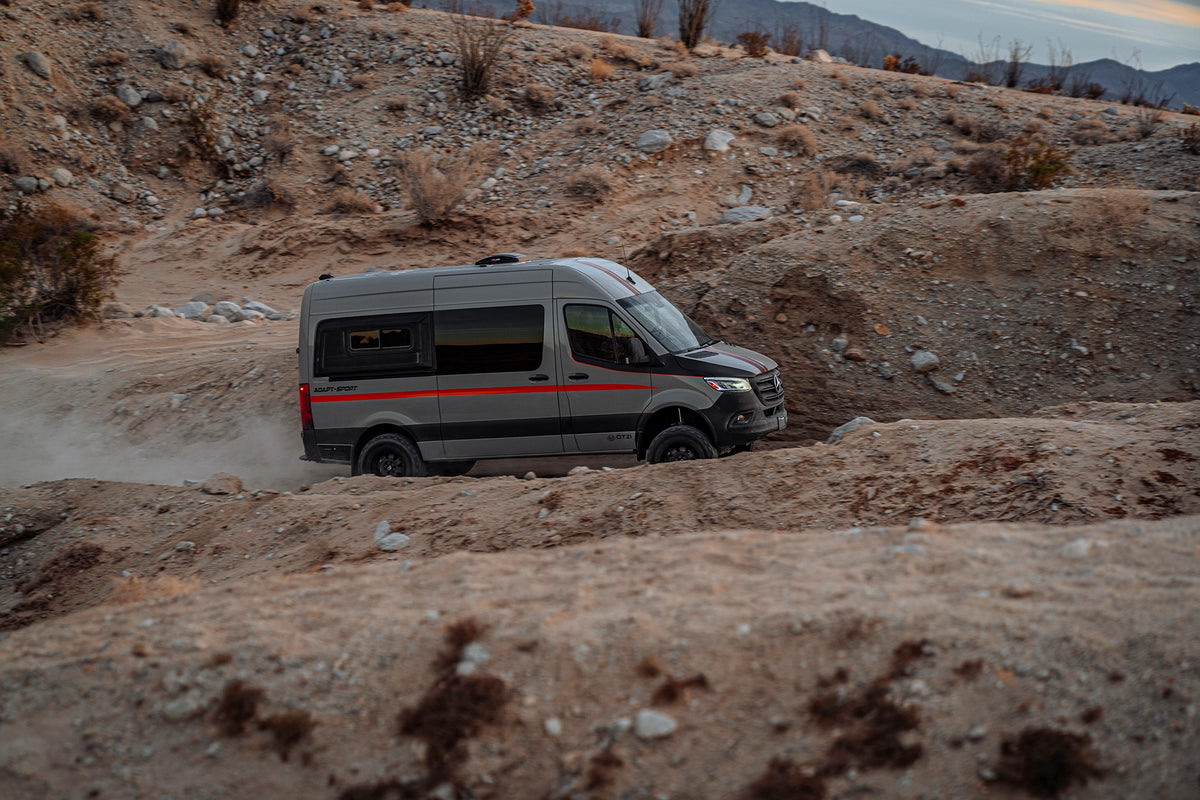
The EKKO Sprinter 23B measures 24 feet 6 inches long. Mercedes-Benz lists its regular 144-wheelbase Cargo Van at 19 feet 6 inches, and the regular 170 at 22 feet 10 inches, before conversion accessories. Those base-vehicle lengths help explain Otzi's van-format approach; use the finished Otzi measurements for parking and clearance decisions. (Winnebago; Mercedes-Benz 2026 Cargo Van)
| Measurement | Published reference | How to use it |
|---|---|---|
| Sprinter 144 Cargo Van overall length | 234 inches / 19 ft 6 in, before conversion accessories. (Mercedes-Benz) | Starting-body reference for the Adapt-Sport 144; include installed carriers and other projections in the final measurement. |
| Regular Sprinter 170 Cargo Van overall length | 274 inches / 22 ft 10 in, before conversion accessories. (Mercedes-Benz) | Longer van-body reference; distinguish the regular 170 from the extended-body Sprinter. |
| EKKO Sprinter 23B overall length | 24 ft 6 in / 294 inches. (Winnebago) | Plan parking depth and space behind the vehicle. |
| EKKO Sprinter 23B exterior width | 7 ft 2.5 in. (Winnebago) | Measure the actual widest points, including mirrors and fitted equipment, for a gate or narrow approach. |
| EKKO Sprinter 23B exterior height | 10 ft 11 in. (Winnebago) | Check overhead clearance along the whole route, not just at the campsite. |
| EKKO Sprinter 23B wheelbase | 170 inches. (Winnebago) | Wheelbase is axle spacing, not overall vehicle length. |
The EKKO's published length is five feet greater than the unconverted 144 Cargo Van reference. Rear carriers and other additions change the finished Otzi length, so discuss the selected equipment before measuring your driveway. (Winnebago; Mercedes-Benz)
Think beyond whether the vehicle fits while stationary. Check the space to reverse, open rear doors, load bikes and walk around the vehicle. That is the everyday value we want the Adapt-Sport's footprint to deliver.
Does a larger coach automatically give you a better gear garage?
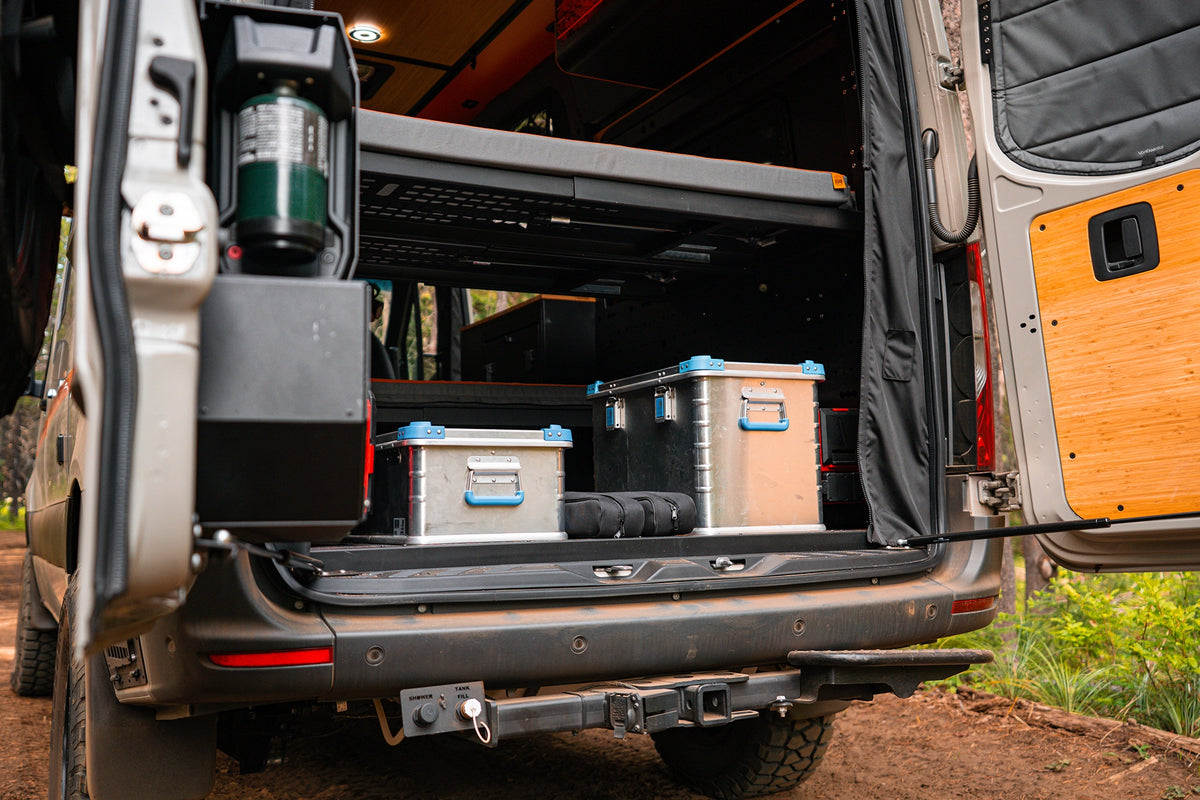
Otzi's Adapt-Sport 144 provides a 78-cubic-foot garage beneath the bed. Winnebago lists 54.6 cubic feet for the EKKO Sprinter's rear garage, within 64 cubic feet of total exterior storage without the exterior kitchen. Separate the garage figure from total storage, then evaluate the opening and arrangement with your own equipment. (Winnebago storage specifications)
Our garage works with rear-door access, the adjustable bed platform and dedicated gear-mounting systems. Otzi's published features include structural L-track, gear walls and mounting options for bins, bikes and other equipment. (Otzi Adapt-Sport 144) The purpose is to give the equipment a usable home, rather than scatter it through the living area.
Bring the items that are hardest to pack to a walkthrough. Check handlebar clearance, the height of storage bins and whether you can retrieve tools without unloading everything in front of them.
Volume is a useful starting point, but the loading sequence makes it practical. Choose a bed height, load the gear, secure it and then see how the rest of the van works around that arrangement.
Can you keep a dedicated bed and still have a flexible interior?
Yes. The Adapt-Sport's removable, expandable Lifestyle Bed System can remain set up as a dedicated bed for an entire trip. Its flexibility becomes useful when your plans change, not because you have to dismantle the bedroom each morning. You can keep your preferred sleeping arrangement and retain the option to use the space differently.
Otzi's published bed arrangements include raised gear-storage positions, lower sleeping positions, seating, dining and rear-facing lounges. The 144 uses a three-panel system, while the 170 uses four panels. (Otzi 144; Otzi 170)
Winnebago lists 32-by-80-inch twin beds and a flex-bed kit for the EKKO Sprinter. (Winnebago 2026 specifications) A ready-to-use bed is valuable, and you can preserve that convenience in an Otzi while keeping the ability to expand, remove or reposition the bed system.
Our production platform also offers interior finish choices. Personalizing the appearance and selecting equipment do not require starting over with a one-off layout.
Why does the bathroom layout matter to usable living space?
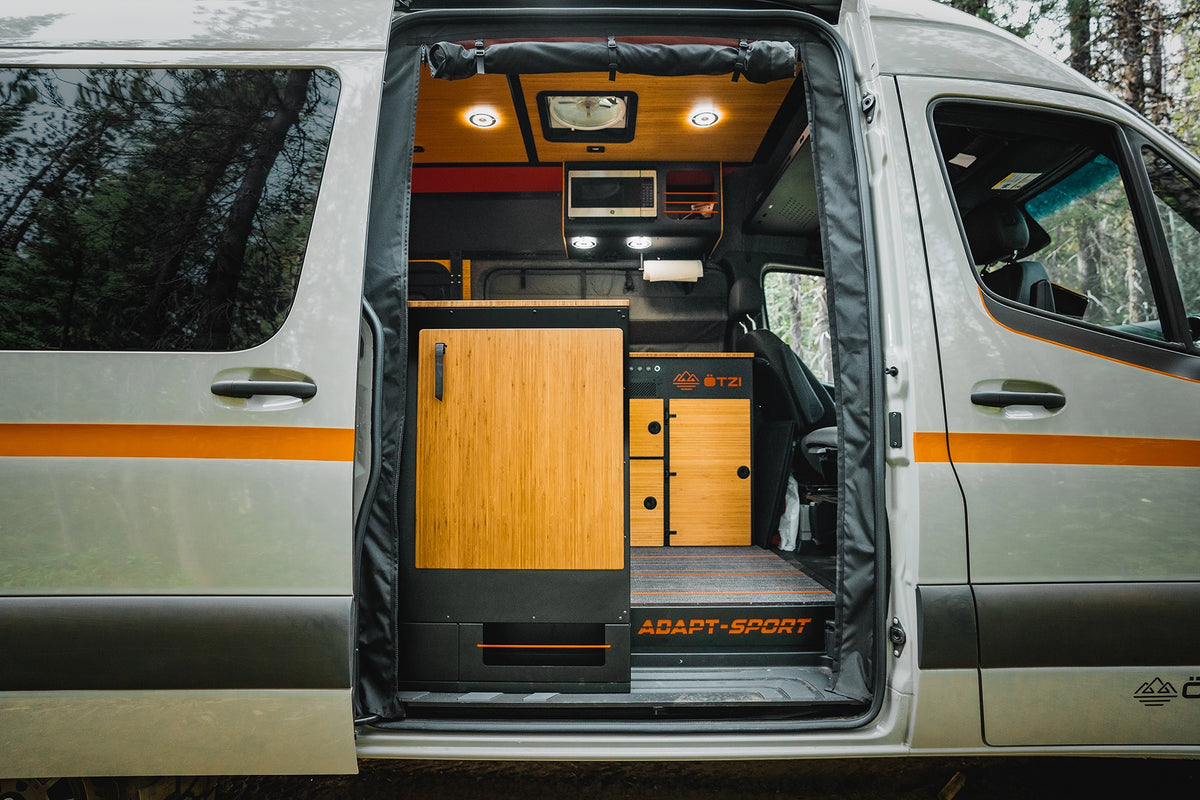
A permanently enclosed bathroom reserves its footprint throughout the day, including the hours when nobody is showering. Otzi's optional fold-down indoor shower provides shower capability without a permanently enclosed shower room. That lets the surrounding living space serve other uses between showers, rather than requiring a larger body to accommodate a fixed enclosure. (Otzi shower options)
The EKKO's dry/wet bath uses a pivoting wall and a 24-by-30-inch shower. The pivot changes how the bathroom works internally; the bathroom still occupies a dedicated part of the floorplan. (Winnebago bathroom specifications)
Otzi separates everyday sink water from optional shower storage. The sink uses removable six-gallon fresh and gray containers; selecting the shower adds separate 35-gallon fresh and 16-gallon gray tanks. That provides 41 gallons of combined fresh water with the shower option, while keeping drinking-water storage accessible for cleaning and filling.
During a walkthrough, try shower deployment and stowage as well as sleeping and cooking. The aim is a complete living experience in a flexible interior, with equipment chosen for your actual use.
What should body choice mean for maintenance and service access?
Body choice should make you look at how the vehicle is assembled and how its equipment can be accessed. Otzi retains the original Sprinter body and uses removable interior wall and ceiling panels, allowing access to wiring and equipment. Accessible components are part of our production design, alongside the space you use every day. (Otzi construction and service access)
Our cabinetry uses powder-coated aluminum structures with bamboo faces and accents. (Otzi materials) During the walkthrough, ask to see panel access, fasteners and the route to components that may need servicing.
Retaining the Sprinter roof avoids adding a separate coach roof to the vehicle. Added windows, vents, accessories and their seals still belong in the inspection routine. Review the completed build's maintenance instructions so the vehicle stays ready for regular use.
How do weight and body size work together away from pavement?
Body size determines the space the van occupies; weight affects the work of moving it. Otzi builds can weigh as light as 6,500 pounds, depending on configuration, with certified and registered vehicle weights. Combine that starting point with the finished dimensions, loading plan and selected equipment when evaluating a route. (Otzi weight guide)
Keeping unnecessary weight out of the build reduces the mass you accelerate and carry uphill. The U.S. Department of Energy also recommends removing unnecessary vehicle weight to improve fuel economy. (U.S. Department of Energy; FuelEconomy.gov)
In comparable sand conditions and with comparable tire support, a heavier vehicle tends to sink farther and push more sand ahead of its tires. Outback Travel Australia's dune-driving guidance recommends lighter vehicles and leaving unnecessary weight behind. (Outback Travel Australia) This makes weight-conscious equipment selection useful beyond the remaining cargo allowance.
For rough access roads, inspect the loaded vehicle's lowest points, rear overhang and roof-mounted equipment. Confirm the route's legal access and current conditions before driving it; a category label alone does not determine permission or clearance.

What should you test before choosing your adventure van?
Test the complete travel routine rather than judging the vehicle only with the doors open in a showroom. Bring your gear measurements, parking constraints and usual travel plans. An Otzi walkthrough can connect the selected van's exterior footprint with the bed, garage, galley and options you will use on the road.
Use this practical checklist:
- Parking and access: Measure the finished vehicle, including mirrors, roof equipment and rear accessories.
- Loading: Put your largest items through the rear opening and check tie-down access.
- Sleeping: Leave the bed in the arrangement you expect to use, then move through the living area.
- Showering: Try deployment, privacy, drying and stowage with the rest of the interior in use.
- Cold-weather equipment: Review Otzi's heated tanks, insulated water lines and heated batteries with the operating instructions for the selected build.
- Trip load: Confirm completed weight and vehicle, axle and tire limits before adding people, water and gear.
We recommend the Adapt-Sport because the van format, useful garage and adaptable interior work together. Explore the Adapt-Sport 144 and Adapt-Sport 170, then arrange your Otzi walkthrough.
Frequently asked questions
Is the EKKO Sprinter a Class B van?
Winnebago categorizes the EKKO Sprinter as a Class C motorhome. It has a dedicated coach body behind the cab, whereas the Otzi Adapt-Sport retains the Sprinter van body. Compare that construction and the finished dimensions rather than relying on an informal category name. (Winnebago)
How long is the EKKO Sprinter compared with a Sprinter van?
The 2026 EKKO Sprinter 23B is 24 feet 6 inches long. Mercedes-Benz lists 234 inches for its 144 Cargo Van and 274 inches for the regular 170, before conversion accessories. Use the selected Otzi's finished measurements, including rear-mounted equipment, for parking decisions. (Winnebago; Mercedes-Benz)
How does the Otzi garage compare with the EKKO's?
The Adapt-Sport 144 has a 78-cubic-foot garage. Winnebago lists 54.6 cubic feet for the EKKO Sprinter rear garage and 64 cubic feet of total exterior storage without the exterior kitchen. Compare the actual openings, bed position and securing points with your equipment. (Winnebago)
Does the Adapt-Sport bed need to be converted every day?
No. The removable, expandable Lifestyle Bed System can remain set up as a dedicated bed. Reconfiguration is available when your plans or equipment change, rather than being a requirement for daily use.
Can an Otzi have an indoor shower without a fixed shower room?
Yes. Otzi offers a fold-down indoor shower. The shower configuration adds separate 35-gallon fresh and 16-gallon gray tanks, while the sink retains removable six-gallon fresh and gray containers. You gain shower capability without reserving a permanently enclosed shower room. (Otzi shower option)
Does the RV class determine campground or trail access?
Check the destination's current rules and the completed vehicle's dimensions and equipment. For example, Assateague's OSV rules require AWD or four-wheel drive and list maximum dimensions of 26 feet long and 8 feet wide, alongside permit and equipment requirements. Check every applicable condition before visiting. (National Park Service)
Explore Otzi adventure vans
- Adapt-Sport 144: Review the compact production adventure van.
- Adapt-Sport 170: Explore the longer-wheelbase van format.
- Buyer education: Visit the Adventure Van Knowledge Hub.
- Visit Otzi: Discuss your configuration and arrange a walkthrough.